In June 2023, a New York lawyer named Steven Schwartz stood before a federal judge and tried to explain six court decisions that did not exist. He had asked ChatGPT to find authority for his client’s claim against the airline Avianca, and ChatGPT produced confident citations, complete with fabricated quotes and invented case numbers. Judge P. Kevin Castel sanctioned Schwartz, his co-counsel, and their firm $5,000. It was the first widely reported entry in what is now a long and growing list of AI hallucination legal cases.
Three years later, that single $5,000 fine reads like an opening act.
A public database maintained by legal researcher Damien Charlotin tracks roughly 1,490 court decisions worldwide, more than 1,000 of them in the United States as of May 2026, where a party relied on AI-hallucinated material and a court responded. The penalties have climbed from four-figure fines to $15,000 per attorney in a federal court of appeals and the first bar suspensions tied to AI filings.
For in-house counsel, the takeaway is direct: every output an AI hands you stays a draft until you have read and verified it. ABA Formal Opinion 512, issued in July 2024, is explicit that lawyers using generative AI keep their duties of competence, candor, and confidentiality, and that the obligation to verify their own work stays with the lawyer. This page is the running record of what happens when that check gets skipped, and the workflow that keeps you off the list.
Seven cases define how courts now treat AI-fabricated citations:
Mata v. Avianca, the first ChatGPT sanction.
People v. Crabill, the first attorney suspension.
Kohls v. Ellison, a struck expert declaration.
Wadsworth v. Walmart, a major firm caught by its own AI tool.
Coomer v. Lindell, the MyPillow defamation filing.
Whiting v. City of Athens, a $15,000 federal appellate sanction.
The Nebraska suspension, the first indefinite bar suspension over AI filings.
The AI Hallucination Legal Cases Tracker
The table below is the at-a-glance record of the landmark cases. The deeper write-ups follow, and the running worldwide count comes from Damien Charlotin’s AI Hallucination Cases Database, which logs new decisions as they land. This page updates as the significant ones do.
Case | Court | Date | AI Involved | Sanction | What Went Wrong |
Mata v. Avianca | S.D.N.Y. | Jun 2023 | ChatGPT | $5,000 | Six invented cases, defended after a warning |
People v. Crabill | Colo. disciplinary | Nov 2023 | ChatGPT | Suspension (1 year and 1 day) | Filed unread cases, blamed an intern |
Kohls v. Ellison | D. Minn. | Jan 2025 | ChatGPT-4o | Expert declaration struck | Expert report cited fake studies |
Wadsworth v. Walmart | D. Wyo. | Feb 2025 | Firm AI tool | $5,000 total, admission revoked | Eight of nine cases fake, partner signed unread |
Coomer v. Lindell | D. Colo. | Jul 2025 | AI filing | $3,000 each | Nearly 30 defective citations |
Whiting v. City of Athens | 6th Cir. | Mar 2026 | Suspected | $15,000 each, plus fees and costs | Two dozen-plus fake citations on appeal |
The Nebraska suspension | Neb. Sup. Ct. | Apr 2026 | Generative AI | Indefinite suspension | 57 of 63 citations defective, denied AI use |
Mata v. Avianca
Mata v. Avianca is the case that put AI hallucinations on every lawyer’s radar.
In a personal-injury suit against the airline, plaintiff’s attorney Steven Schwartz used ChatGPT to research the brief and filed six decisions that ChatGPT had invented, with fabricated quotes and internal citations.
When opposing counsel could not locate the cases, Schwartz asked ChatGPT whether they were real, and it assured him they were. On June 22, 2023, Judge P. Kevin Castel sanctioned Schwartz, co-counsel Peter LoDuca, and their firm $5,000 under Rule 11, finding they had acted in subjective bad faith by standing behind the fake cases after being warned.
The sanction landed on what happened after the error. Schwartz stood behind six cases he had never read, even after opposing counsel flagged them.
People v. Crabill
People v. Crabill produced the first attorney suspension over AI-fabricated cases. Colorado lawyer Zachariah Crabill, two years into practice, used ChatGPT to find authority for a motion he had never drafted before, then filed it without reading the cases. At the hearing he blamed a legal intern for the bad citations, then admitted a week later in an affidavit that he had used ChatGPT. In November 2023, a Colorado disciplinary judge approved a suspension of one year and one day, with 90 days to serve, for violations including competence, diligence, and candor to the tribunal.
Crabill’s deeper mistake came at the hearing. Blaming the intern, then walking it back a week later, turned a citation error into a candor violation.
Kohls v. Ellison
Kohls v. Ellison extended the risk from briefs to expert testimony. Defending a Minnesota law against political deepfakes, the state attorney general filed a declaration from a Stanford misinformation expert. The declaration, drafted with ChatGPT-4o, cited two academic articles that did not exist and misattributed a third. In January 2025, the federal court struck the declaration, writing that the fabricated citations shattered the expert’s credibility with the court.
Kohls is the reminder that an expert report drafted with AI carries the same duty as a brief. The verification duty travels with any AI-assisted work product, including the declarations in-house teams commission.
Wadsworth v. Walmart
Wadsworth v. Walmart showed that a large firm and an internal AI tool do not lower the risk. Attorneys at Morgan and Morgan, one of the largest plaintiff firms in the country, filed motions in a product-liability case citing nine cases, eight of which were fake. The lawyer who drafted them had used the firm’s in-house AI database. In February 2025, Judge Kelly Rankin revoked the drafting attorney’s pro hac vice admission and fined him $3,000, with $1,000 each for the supervising partner and local counsel who e-signed the filing without reading it.
The signature is the tell. Every lawyer who signs a filing owns its citations, including the supervising partner who never drafted a word.
Coomer v. Lindell
Coomer v. Lindell brought the pattern into a high-profile defamation case. Two attorneys representing MyPillow CEO Mike Lindell filed a brief prepared with AI that contained nearly 30 defective citations, including cases that did not exist. In July 2025, the federal court in Colorado fined each attorney $3,000.
A prominent client buys no margin here. The court reads the citations regardless of the name on the caption.
Whiting v. City of Athens
Whiting v. City of Athens is the clearest federal appellate statement of the verification duty to date. In March 2026, a Sixth Circuit panel sanctioned two attorneys whose briefs contained more than two dozen fabricated citations and misrepresentations of fact.
The court ordered each to pay $15,000 to the court registry, reimburse the opposing party’s full appellate fees across three appeals, pay double costs, and face a disciplinary referral. The panel wrote that no filing should contain any citations, whether provided by generative AI or any other source, that the lawyer has not personally read and verified.
Whiting settles the source question. A citation from an associate, a database, or a chatbot carries the same rule: the signing lawyer has read it, or it does not go in.
The Nebraska Suspension
The Nebraska suspension is the first US bar discipline reported to remove a lawyer from practice entirely over AI filings. In a February 2026 divorce appeal, Omaha attorney Greg Lake filed a brief in which 57 of 63 citations were defective, including 20 hallucinated cases, three fabricated decisions, and invented statutory quotes. Asked directly whether he had used AI, Lake first denied it, then admitted he had and called it a grave error of judgment. In April 2026, the Nebraska Supreme Court suspended him until further notice and ordered a disciplinary investigation.
What drove the severity was the denial. Candor with the court is the one thing an AI cannot do for the lawyer who used it.
What the Legal Cases Have in Common
Across the cases on record, three patterns repeat.
The cover-up draws the harsher penalty. Schwartz defended the fake cases after the warning, Crabill blamed an intern, and Lake denied using AI. In each, the court’s sharpest language landed on the lack of candor, and the lawyers who owned the mistake early fared better than those who did not.
The penalties are escalating. The sanctions have grown from a $5,000 fine in 2023 to $15,000 per attorney and indefinite suspension in 2026, and the courts imposing them have moved from trial courts to federal appellate panels and state supreme courts.
Most filers are self-represented, and the lawyer cases carry the career risk. In the decisions Charlotin tracks, the majority involve pro se litigants. The cases involving licensed attorneys are fewer, and they are the ones that end in fines, referrals, and suspensions.
What AI Hallucination Legal Cases Mean for In-House Counsel
Most lawyers in this tracker were litigators or self-represented parties, and the duty they violated applies just as squarely to in-house counsel. The risk shows up in three places.
First, in AI-assisted memos and research that inform a business decision. A hallucinated regulatory citation in a board memo never reaches a judge, and it can still steer a decision wrong.
Second, in work product filed by outside counsel under the company’s matters. Wadsworth v. Walmart sanctioned the supervising partner who signed a filing he had not drafted. An in-house lawyer who owns a matter owns the citations filed under it.
Third, in declarations, expert reports, and submissions the legal team commissions. Kohls v. Ellison struck an expert declaration because the expert used ChatGPT without checking the result.
These risks sit alongside others in-house teams already manage, including whether an AI chat is protected by privilege, which a federal court has held it may not be. The common thread is the duty of competence and candor, and the verification discipline that AI governance and accountability frameworks now expect from legal departments.
How to Avoid Becoming the Next Case
The verification workflow is the same one good lawyers have always used for a junior associate’s research. AI only makes the speed tempting enough to skip it.
Treat every AI citation as unverified. Until you have opened the source and read it, the citation is a lead, not authority.
Read the full opinion, not the AI summary. Hallucinations include real cases cited for propositions they never held, so the summary can be invented even when the case is real.
Confirm the quote appears in the source. Search the quoted language in the document and confirm it exists and supports your point.
Use AI that cites to the source document. Tools that quote from your uploaded documents with character-level citations let you verify in one click, rather than trusting the model’s memory.
Disclose AI use when asked, and check your court’s standing order. A growing number of judges require certification of AI use, and the cases show that denial draws a harsher penalty than the error.
Michele Murray, who leads legal at ARKO Corp and joined the CZ and Friends podcast, put the discipline plainly:
“It’s really only as good as a user. There has to be a knowledge base for the person, because you do have to verify the results.”
Murray’s team uses AI across daily legal work and still treats the human read as the step that cannot be delegated.
Start this quarter with three moves:
Adopt a written AI-use and verification policy your team follows.
Require that every citation in a filing or a memo be read against its source before it goes out.
Choose AI that cites back to the document so verification is a click rather than a research project.
How GC AI Helps You Verify Before You File
GC AI is legal AI software and a legal AI platform built for in-house counsel. We built it so verification takes one click. Cecilia Ziniti, our founder and a three-time general counsel, started GC AI after watching general-purpose AI hand lawyers confident answers they had no fast way to check.
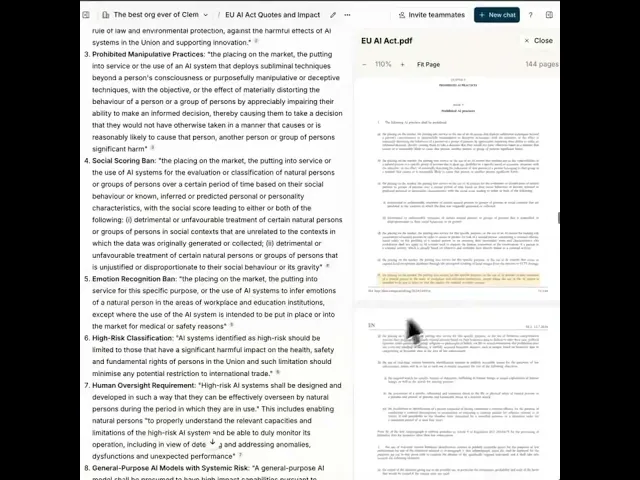
Exact Quote returns a character-level citation for every quote it pulls from your documents, so the source is one click away and the language is verifiable against the exact spot it came from. Every case in this tracker started with a citation nobody clicked through, and Exact Quote is built to make that click the easy path.
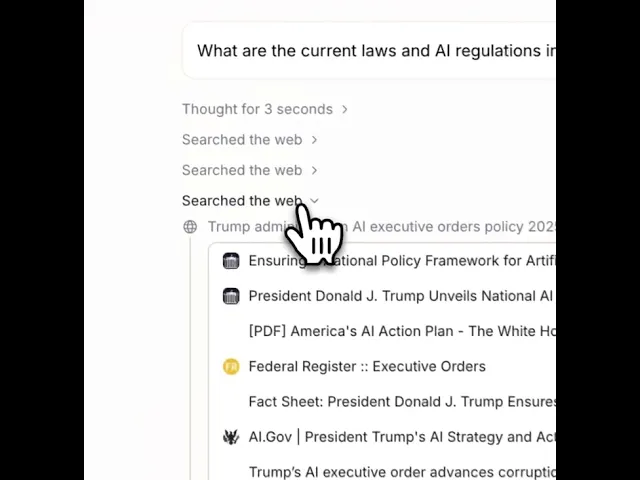
Research runs against authoritative databases, primary law, and government sources, and returns its findings with citations you can open.
Purpose-built legal AI also starts from a higher accuracy floor. On GC AI’s In-House Legal Bench, a head-to-head test of 100 in-house legal tasks scored against 1,200+ attorney-developed criteria in May 2026, purpose-built legal AI scored higher than general-purpose tools:
GC AI: 86.8%
ChatGPT (GPT-5.5): 79.8%
Claude (Opus 4.7): 68.4%
Gemini (3.1 Pro): 57.5%

The widest gaps were on research-intensive tasks, the exact work where hallucinated citations are most likely to appear. More than 2,200 in-house legal teams use GC AI as of September 2026, including the legal departments at Hitachi, TIME, Helix, Liquid Death, Snyk, and Columbia Sportswear.
No AI removes the verification duty, and no honest vendor claims to. What changes is how long the check takes. When the citation links back to the source, reading it is a click, and the lawyers in this tracker were undone by the clicks they skipped.
For a deeper look at how general-purpose tools compare for legal work, read ChatGPT for lawyers and the guide to the best legal AI tools for in-house counsel.
Every lawyer in this tracker trusted an output they had not read. An in-house team that builds verification into its workflow and runs on AI that cites back to the source captures the speed of AI and keeps a clean record. That is the line between using AI well and becoming the next entry here.
Frequently Asked Questions
Can a Lawyer Be Sanctioned for Using AI?
Yes, and dozens already have. Courts sanction lawyers for filing AI-generated citations without verifying them, and the use of AI itself is permitted when the lawyer checks the output. Penalties on record range from $5,000 fines in Mata v. Avianca to $15,000 per attorney in the Sixth Circuit and indefinite bar suspension in Nebraska.
Does ChatGPT Give Fake Citations?
Yes. General-purpose AI like ChatGPT can produce citations that look authentic but reference cases, quotes, or statutes that do not exist, a failure known as a hallucination. ChatGPT generated the fabricated cases in Mata v. Avianca, People v. Crabill, and Wadsworth v. Walmart. Any AI output used for legal work has to be verified against the primary source.
How Many AI Hallucination Legal Cases Have There Been?
More than 1,000 in the United States. A public database maintained by researcher Damien Charlotin tracked roughly 1,490 decisions worldwide and more than 1,000 in the US as of May 2026, and the count grows weekly. The majority involve self-represented litigants, and the cases involving licensed attorneys carry the steepest professional consequences.
What Is the Penalty for Citing Fake AI Cases?
Penalties range from monetary fines to loss of license. Recorded sanctions include $5,000 fines in Mata v. Avianca, $3,000 per attorney in Coomer v. Lindell, $15,000 per attorney plus opposing fees in Whiting v. City of Athens, and suspension from practice in People v. Crabill and Nebraska. Courts also refer attorneys for bar discipline and revoke pro hac vice admission.
What Is an AI Hallucination in Law?
An AI hallucination is output that an AI presents as fact but that is fabricated or unsupported. In legal work it takes three forms: citations to cases that do not exist, fabricated quotes attached to real cases, and real cases cited for propositions they never held. All three have drawn sanctions.
Does ABA Formal Opinion 512 Require Lawyers to Check AI Output?
Yes. ABA Formal Opinion 512, issued in July 2024, holds that lawyers using generative AI keep their duties of competence, candor, and confidentiality, and must have a reasonable understanding of the tools they use. The opinion is clear that a lawyer keeps the duty to verify the accuracy of their own filings and cannot hand that duty to an AI tool.
How Do You Avoid AI Hallucinations in Legal Work?
Verify every citation against its primary source before filing. Read the full opinion rather than the AI summary, confirm each quote appears in the document and supports your point, and use AI that cites to the source with character-level references so verification takes one click. GC AI’s Exact Quote is built for this.
Are In-House Counsel at Risk From AI Hallucinations?
Yes, in three ways: AI-assisted memos and research that inform business decisions, work product filed by outside counsel under the company’s matters, and any declaration or report the legal team commissions. The verification duty applies to every AI-assisted work product a legal team touches, court briefs included.
What Is the Legal Risk of AI Hallucinations?
The legal risks include monetary sanctions, dismissal of claims, struck evidence, bar discipline up to suspension, malpractice exposure, and reputational damage. Across the cases on record, the lawyers who acknowledged the error early fared better than those who denied or defended it.