In 2023, two New York lawyers filed a federal brief built on court decisions that did not exist. ChatGPT had invented the cases, and when the lawyers asked whether they were real, the tool assured them the decisions “can be found in reputable legal databases such as LexisNexis and Westlaw.” A judge in Manhattan called one of the AI’s analyses “gibberish” and sanctioned the lawyers $5,000. The episode put a hard question to the profession. What does a lawyer owe when an AI tool does the work? The American Bar Association answered with ABA Formal Opinion 512.
ABA Formal Opinion 512, issued July 29, 2024, is the first formal ethics guidance the ABA has published on a lawyer’s use of generative AI. Lawyers may use these tools. The duties they already carry under the Model Rules of Professional Conduct travel with them when they do, and the opinion walks through six of those duties: competence, confidentiality, communication, candor, supervision, and fees.
For in-house counsel, that framing matters more than it first looks. You are not billing a client for research time or citing invented cases to a judge, so two of the six duties land differently for your team. The other four apply to your work every day, on every contract you run through an AI platform and every memo you ask it to draft.
GC AI is the legal AI platform built for in-house counsel, and the duties in Formal Opinion 512 are the ones our customers work inside every day. That is why we put together this guide.
What ABA Formal Opinion 512 Says
ABA Formal Opinion 512 is an advisory ethics opinion from the ABA Standing Committee on Ethics and Professional Responsibility, and it interprets the Model Rules of Professional Conduct as they apply to generative AI, the kind of AI that produces text and other content the way ChatGPT, Claude, and purpose-built legal AI platforms do.
The opinion carries persuasive authority. It interprets the ABA Model Rules and strongly shapes how courts and state bars read a lawyer’s duties, though each state adopts its own binding version of those rules, and a growing number of state and local bar opinions on AI cite 512 directly.
The opinion arrived after incidents like the 2023 sanctions in Mata v. Avianca put AI ethics on the agenda of bar committees nationwide. Its conclusion is permissive. Lawyers can use generative AI to serve clients well, as long as they understand the tool, protect client information, verify its output, supervise the people using it, and charge for it fairly.
The Six Duties ABA Formal Opinion 512 Puts on Lawyers
ABA Formal Opinion 512 organizes a lawyer’s obligations into six duties from the Model Rules of Professional Conduct.
Duty | Model Rule | What ABA Formal Opinion 512 Requires |
Competence | Rule 1.1 | Understand the capabilities and limits of any AI tool you use, and keep that understanding current. A working grasp of the tool is enough. |
Confidentiality | Rule 1.6 | Keep client confidential information out of tools that could disclose or reuse it. Get the client’s informed consent before entering their confidences. Generic boilerplate consent falls short. |
Communication | Rule 1.4 | Tell clients about your AI use when it is material to the work, when they ask, or when the rules otherwise require it. |
Candor and Meritorious Claims | Rules 3.3 and 3.1 | Review AI output and correct its errors before you rely on it. Never let a hallucinated case or quote support a filing or an argument. |
Supervision | Rules 5.1 and 5.3 | Managers must set clear AI policies and make sure lawyers and staff are trained to use AI within the rules. |
Reasonable Fees | Rule 1.5 | Do not bill a client to learn AI in general. Charge for a specific tool only when the client requests it, and disclose AI costs honestly. |
Competence (Model Rule 1.1)
The competence duty asks you to know your tools. ABA Formal Opinion 512 says a lawyer must have a reasonable understanding of the capabilities and limitations of any generative AI they use, and refresh that understanding as the technology moves. The opinion is careful to add that lawyers do not have to become AI experts, much as they were never required to become forensic technologists to handle e-discovery.
In-house, this is the duty you exercise most, because you choose the platform and decide which work to trust it with. Competence looks like knowing that a general-purpose chatbot can fabricate a citation, that a legal AI platform built for in-house work is designed to reduce that risk, and that any output still needs a human read before it leaves your desk.
Michele Murray of ARKO Corp, speaking on GC AI’s CZ and Friends podcast, described the discipline in one line:
“It’s really only as good as a user. There has to be a knowledge base for the person, because you do have to verify the results.”
The tool is leverage for a lawyer who knows the subject, and it is a liability for one who treats its output as finished.
Confidentiality (Model Rule 1.6)
Confidentiality is the duty the opinion treats most carefully. Before client confidential information goes into a generative AI tool, ABA Formal Opinion 512 says you have to evaluate the risk that the tool could disclose or reuse it, and where the risk warrants it, get the client’s informed consent first. The opinion specifically rejects relying on generic boilerplate buried in an engagement letter. Consent has to be informed and specific.
For an in-house team, your client is the company, so the consent analysis shifts to the tool itself. The questions that decide whether a platform is safe for privileged material are concrete:
Do the model providers train on your inputs?
Where does the data live, and how is it encrypted?
GC AI lays out its answers on its security page, and the same questions are worth asking of any tool, which is the heart of our breakdown on whether ChatGPT is confidential enough for legal work.
This duty also runs straight into privilege. A federal court has already held that documents created with a public AI tool, used without attorney direction, can fall outside attorney-client privilege entirely, a risk we cover in our analysis of the Heppner ruling.
Communication With Clients (Model Rule 1.4)
Communication means keeping the client informed about how their matter is handled, and ABA Formal Opinion 512 applies that to AI use. The opinion calls for disclosure in specific situations: when the use of AI is material to the representation, when the client asks, or when the engagement or other rules call for it.
For an in-house team, the practical form of this duty is a written AI policy. One internal document that says which tools are approved, what they may be used for, and who signs off answers the communication question before it is ever asked, and it doubles as the record your supervisors need.
Candor and Meritorious Claims (Model Rules 3.3 and 3.1)
These are the duties the Mata v. Avianca lawyers broke. ABA Formal Opinion 512 requires you to review generative AI output and correct its errors before you rely on it, and it forbids letting a fabricated case, quote, or authority become the basis of a filing or an argument. Generative AI can produce text that is fluent, confident, and invented, and the duty of candor puts the job of catching that on the lawyer every time.
In-house counsel rarely stand before a tribunal, yet this duty reaches their work all the same. The same verification discipline applies when you hand a research memo to the CEO, cite a regulation to the board, or send a position to opposing counsel.
Tools vary widely on how well they support that check, which is why GC AI built the In-House Legal Bench to measure legal AI on real in-house tasks, including the research-heavy work where invented authority is the biggest risk.
Supervision (Model Rules 5.1 and 5.3)
Supervision falls on the lawyers who manage others. ABA Formal Opinion 512 reads Rule 5.1 to cover supervising other lawyers and Rule 5.3 to cover non-lawyer staff, and it treats the generative AI tool itself as something that needs managerial oversight. Managers have to put clear policies in place and make sure the people using AI are trained to use it within the rules.
For a general counsel, this is a direct mandate, because you own the policy, the approved-tools list, and the training. The opinion effectively treats a generative AI tool like a capable junior associate, fast and genuinely useful, and in need of direction and review from someone who is accountable for the result. Building that fluency across a team is its own project, which is why structured AI courses for legal professionals have become part of how in-house teams meet this duty.
Reasonable Fees (Model Rule 1.5)
The fees duty keeps AI from turning into a billing problem. ABA Formal Opinion 512 says a lawyer cannot bill a client for the general time spent learning to use AI, much as they cannot bill for keeping up with the law. They may bill for learning a specific tool only when the client asks them to use it on the matter, and any AI costs charged to the client must be disclosed and reasonable.
This duty lands lightest on in-house counsel, who do not bill the business by the hour. It matters most in how your team works with outside firms. A firm that produces a first-draft memo in twenty minutes with AI cannot reasonably bill it as eight hours of associate time, which is one reason in-house teams that adopt AI tend to reduce outside counsel spend.
What ABA Formal Opinion 512 Means in Practice for In-House Counsel
ABA Formal Opinion 512 was written for the whole profession, and four of its six duties (competence, confidentiality, candor, and supervision) map directly onto the in-house workflow. The distance between reading the opinion and living it comes down to a handful of habits.
Here is what meeting 512 looks like for an in-house team:
Pick tools you understand. Competence starts with the platform. Know whether it retains your data, whether it shows its sources, and where it tends to fail.
Keep confidential material in tools built to hold it. Before privileged or sensitive data goes into any AI, confirm the vendor’s retention, training, hosting, and encryption answers.
Verify every output you rely on. Treat AI like a fast, capable junior whose work you still read. Check the citation, read the clause, confirm the rule.
Write the policy down. A single internal document covering approved tools, approved uses, and sign-off satisfies the communication and supervision duties at once.
Train the team. Supervision assumes the people using AI know how to stay within the rules. Make the training real, and refresh it as the tools change.
How GC AI Helps You Meet the Duties in ABA Formal Opinion 512
The duties in ABA Formal Opinion 512 belong to the lawyer, and no platform can discharge them for you. The platform you work in can make them easier to meet or harder.
GC AI is a legal AI platform built for in-house counsel, used by more than 2,100+ in-house legal teams, including those at TIME, Riot Games, Arc’teryx, and Eventbrite. Several of its design decisions support the duties 512 puts on you.
Verification you can do in seconds. The candor and competence duties both turn on checking AI output before you rely on it.
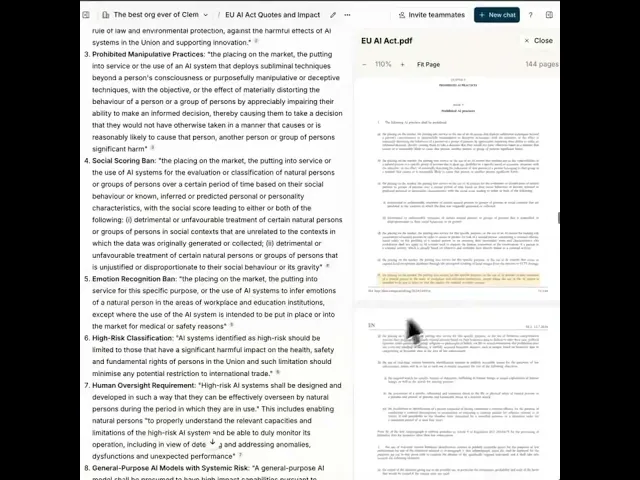
Exact Quote returns character-level citations you can click and trace back to the exact line in the source document, so confirming a quote or a clause takes a moment instead of a manual hunt.
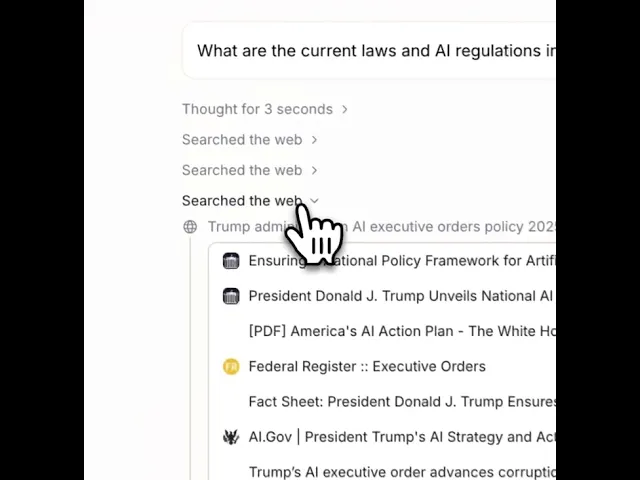
Research pulls from authoritative primary law and government sources with citations, which is the difference between an answer you can stand behind and one you have to rebuild from scratch.
A security posture built for confidential work. The confidentiality duty turns on what a tool does with your data. GC AI is SOC 2 Type II and SOC 3 certified, GDPR compliant, with zero data retention agreements with OpenAI and Anthropic, and AES-256 encryption. Those are the answers to the retention, training, hosting, and encryption questions the duty asks, and they are laid out on the GC AI security page.
Training that satisfies the supervision duty. Rules 5.1 and 5.3 expect the lawyers who manage a team to make sure everyone uses AI within the rules. GC AI’s classes have trained more than 6,000 in-house lawyers, and the Legal AI Ethics class walks through ABA Formal Opinion 512 itself, so the people on your team learn the duties alongside the tool.
GC AI was built by Cecilia Ziniti, a three-time general counsel, for the in-house seat she had sat in. That origin shows up in how the platform treats verification and confidentiality as defaults.
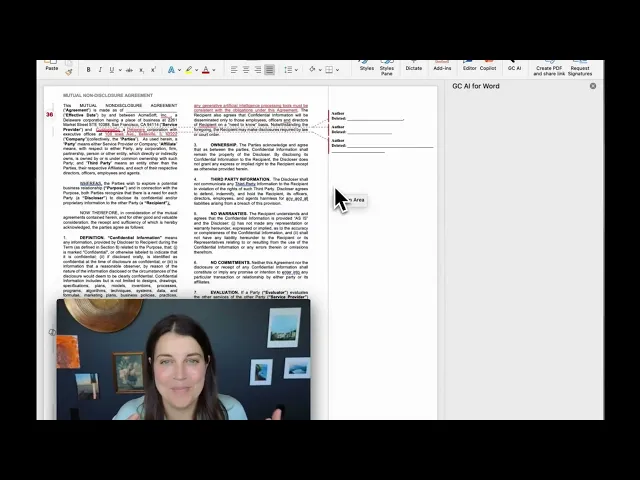
Joys Choi, Senior Director of Legal at Tipalti, summed it up:
“Out of all the AI tools I’ve used, GC AI delivers the most impact for attorneys: confidential, reliable, and efficient.”
Choi’s lean team runs analysis across multiple jurisdictions on confidential company matters, and she has credited GC AI with saving her 609 hours in a single year. The duties 512 names, protecting the confidences and verifying the work, are the ones a platform built for in-house counsel is designed to make routine.
The Full Text of ABA Formal Opinion 512
ABA Formal Opinion 512 is published free by the ABA Standing Committee on Ethics and Professional Responsibility. You can read the complete opinion in the official ABA Formal Opinion 512 PDF, and the ABA’s announcement of the guidance gives the short version. The document is dated July 29, 2024, and titled “Generative Artificial Intelligence Tools.” It interprets the ABA Model Rules of Professional Conduct, which each state adapts into its own binding rules.
Put the Duties Into Practice
ABA Formal Opinion 512 rewards the teams that build verification, security, and training into their daily work, before a mistake forces the issue. GC AI gives in-house counsel a platform designed for exactly that: citations you can trace, a security posture built for confidential matters, and classes that teach your team to use AI within the rules. Start with one real matter and watch how the verification step changes.
Frequently Asked Questions
What Is ABA Formal Opinion 512?
ABA Formal Opinion 512 is the American Bar Association’s first formal ethics opinion on a lawyer’s use of generative AI, issued July 29, 2024. It interprets the Model Rules of Professional Conduct as they apply to AI tools and covers six duties: competence, confidentiality, communication, candor, supervision, and reasonable fees. It permits AI use and explains how to handle it ethically.
When Was ABA Formal Opinion 512 Issued?
ABA Formal Opinion 512 was issued on July 29, 2024, by the ABA Standing Committee on Ethics and Professional Responsibility. It was the first formal ethics guidance the ABA published on generative AI tools.
Does ABA Formal Opinion 512 Ban Lawyers From Using AI?
No. ABA Formal Opinion 512 permits lawyers to use generative AI and focuses on using it responsibly. It requires lawyers to understand the tool, protect client confidentiality, verify the output, supervise its use, and charge reasonable fees.
What Are the Key Points of ABA Formal Opinion 512?
The key points of ABA Formal Opinion 512 are six duties drawn from the Model Rules: competence (understand the tool’s capabilities and limits), confidentiality (protect client data and obtain informed consent), communication (tell clients about AI use when it is material), candor (verify output and avoid hallucinated citations), supervision (set policies and train staff), and reasonable fees (do not bill clients to learn AI in general).
Is There a PDF of ABA Formal Opinion 512?
Yes. The full text of ABA Formal Opinion 512 is available as a free PDF from the American Bar Association at americanbar.org. The document is titled “Generative Artificial Intelligence Tools” and dated July 29, 2024.
Does ABA Formal Opinion 512 Apply to In-House Counsel?
Yes. ABA Formal Opinion 512 applies to all lawyers, including in-house counsel. Four of its six duties, competence, confidentiality, candor, and supervision, map directly onto in-house work, while the communication and fees duties apply differently for an in-house team, whose client is the company itself.
Is ABA Formal Opinion 512 Binding?
ABA Formal Opinion 512 is persuasive authority. It interprets the ABA Model Rules, which each state adapts into its own binding rules of professional conduct, and many state and local bar opinions on AI cite 512, so courts and disciplinary bodies treat it as influential.
How Does ABA Formal Opinion 512 Affect Using ChatGPT for Legal Work?
ABA Formal Opinion 512 allows using general-purpose tools like ChatGPT for legal work, as long as you meet its duties. The two that matter most with a consumer tool are confidentiality, which means keeping client confidences out of a tool that may retain or train on them, and candor, which means verifying every citation because these tools can fabricate cases.