GC AI vs CoCounsel: Research Depth, or In-House Breadth?
CoCounsel is built on Westlaw's corpus. GC AI is built on the in-house workflow.
Where high-performing legal teams learn AI
















One question decides this: research depth, or daily breadth?
CoCounsel is Thomson Reuters' agentic AI legal assistant, grounded in the Westlaw and Practical Law corpus. GC AI was built from the opposite starting point, by a 3x General Counsel, around the scope of an in-house week.
What is GC AI?
Legal AI built exclusively for in-house counsel
A 20,000-line legal system prompt tuned for in-house work, Playbooks for the contracts you review weekly, Research across primary law, and answers written for the people you forward them to.
CoCounsel: Built research-first on Thomson Reuters' stack. Deep Research is the centerpiece; Westlaw and Practical Law are the corpus underneath.
What are you actually buying?
The AI, or the AI plus the Westlaw bundle
GC AI is available as a standalone platform. For Individual seats, US Case Law and International Law are available as add-ons. Team and Enterprise plans include one legal database of the organization's choice (add-on of both databases available).
CoCounsel: A three-part decision: the AI, the Westlaw corpus underneath, and the Thomson Reuters relationship. Teams without a Westlaw subscription should ask which they are buying.
How do you evaluate it?
Test it on your own work before any sales call
14-day free trial, no credit card. Load your contracts, run your research questions, and decide before a purchase conversation starts.
CoCounsel: No published pricing as of May 2026; a demo request through a Thomson Reuters representative is the entry point.
Compare GC AI vs CoCounsel
Both platforms run agentic research and both work inside Microsoft Word. The difference is the starting point: CoCounsel began as a research product, GC AI began as an in-house lawyer's daily workspace.
| Feature |  | CoCounsel |
|---|---|---|
| Built for | In-house counsel exclusively | Research-heavy legal work backed by Westlaw and Practical Law |
| Origin | Built in 2023 by Cecilia Ziniti, 3x former General Counsel (Anki, Bloomtech, Replit) | Launched by Casetext in March 2023, acquired by Thomson Reuters, relaunched as CoCounsel Legal in August 2025 |
| Research backbone | US Case Law and International Law: 14M+ US court opinions with treatment flags, plus case law and legislation from 30+ jurisdictions across Europe, Asia-Pacific, and Latin America. Team and Enterprise plans include one legal database of the organization's choice (add-on of both databases available). | Westlaw and Practical Law corpus, built over 175 years and validated by 4,500+ subject-matter experts |
| Signature capability | Easy Prompt, Exact Quote, Playbooks, Skill Library, Chat2 in Word | Deep Research, Agentic Guided Workflows, Knowledge Search, Legal Assistant |
| Contract review | Playbooks pre-built for NDAs, DPAs, SaaS MSAs, and commercial MSAs, extensible with your positions | Contract drafting and analysis through the Assistant and guided workflows |
| Citation | Exact Quote: character-level citation back to the source document | Citations and source links into the Thomson Reuters corpus |
| Workflows | Skill Library: NDAs, DPAs, regulatory summaries, board consents | Agentic Guided Workflows: privacy policies, employee policies, complaints, discovery, deposition review |
| Microsoft Word | GC AI for Word: redlining, issue spotting, drafting, comment summarization, web research via Chat2 | Available inside Microsoft 365 |
| Dependencies | None: ships standalone | Strongest with Westlaw, Practical Law, and Checkpoint subscriptions |
| Pricing | $500 per seat per month, published; no seat minimum | Not published as of May 2026; demo through a Thomson Reuters representative |
| Free trial | 14 days, no credit card | None published as of May 2026 |
| Education | GC AI Classes: free, CLE-certified (California), taught by former GCs; 6,000+ lawyers trained | Westlaw training resources; CLE eligibility not listed as of May 2026 |
| Security | SOC 2 Type II, SOC 3, GDPR, ZDR with OpenAI and Anthropic, AES-256 | SOC 2, ISO 27001 as of May 2026 |
| Output style | Business-ready, stakeholder-friendly, ready to paste into Slack or a board deck | Structured around Thomson Reuters' editorial conventions |
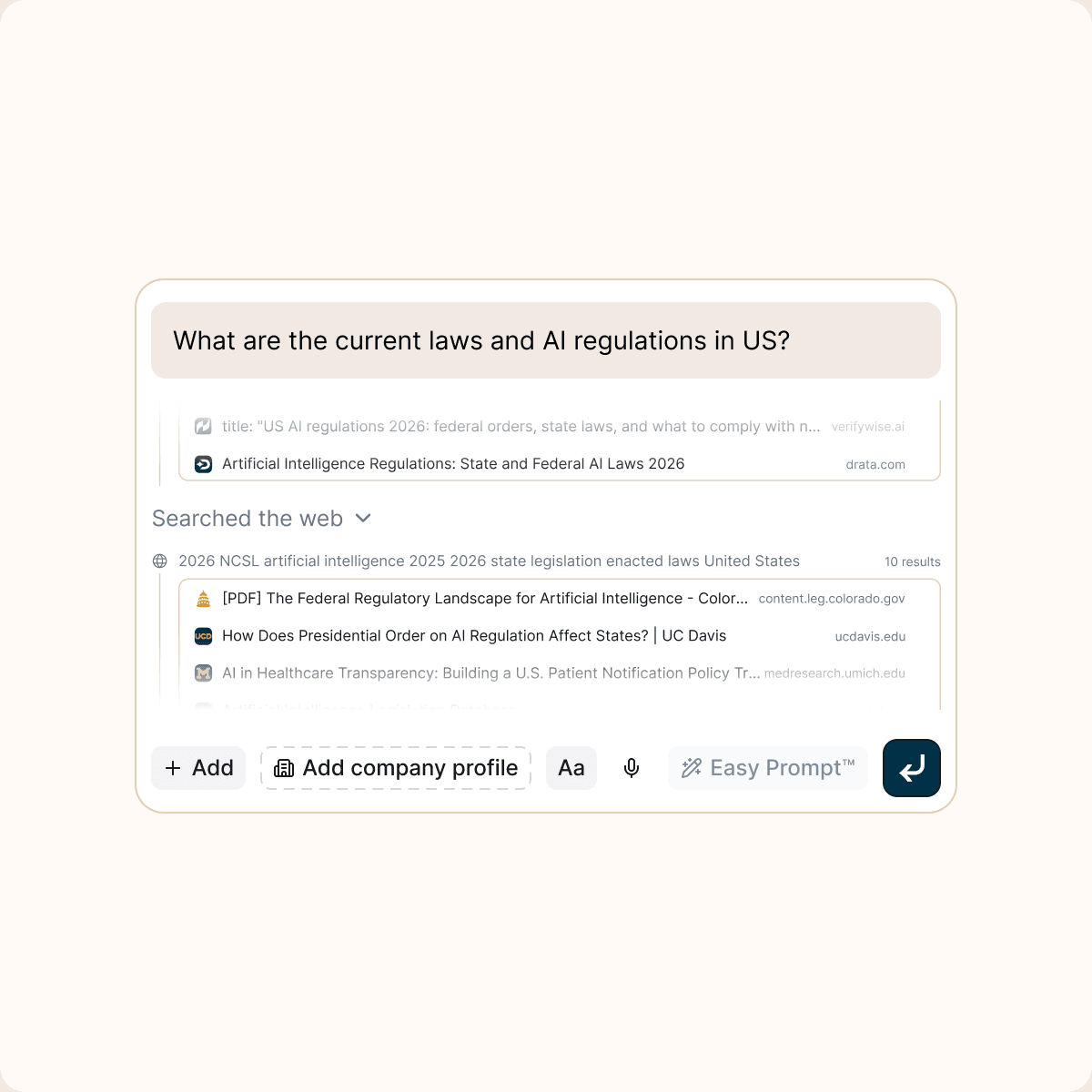
Research that reaches the whole in-house docket
GC AI Research runs multi-agent searches across authoritative legal databases and government sources, returning current case law, statutes, and regulations with citations you can click through. It ships standalone: no Westlaw subscription sits underneath it.
CoCounsel's Deep Research is genuinely differentiated for what it was built to do. Reasoning across thousands of documents grounded in a 175-year editorial corpus is the right tool for a multi-state survey, a litigation strategy question, or a tax analysis routed through Checkpoint.
The honest framing: if research depth is your bottleneck and you already run on Westlaw, CoCounsel is the most direct AI extension of that workflow. If research is one of eight things on your desk this week, that is a different purchase.
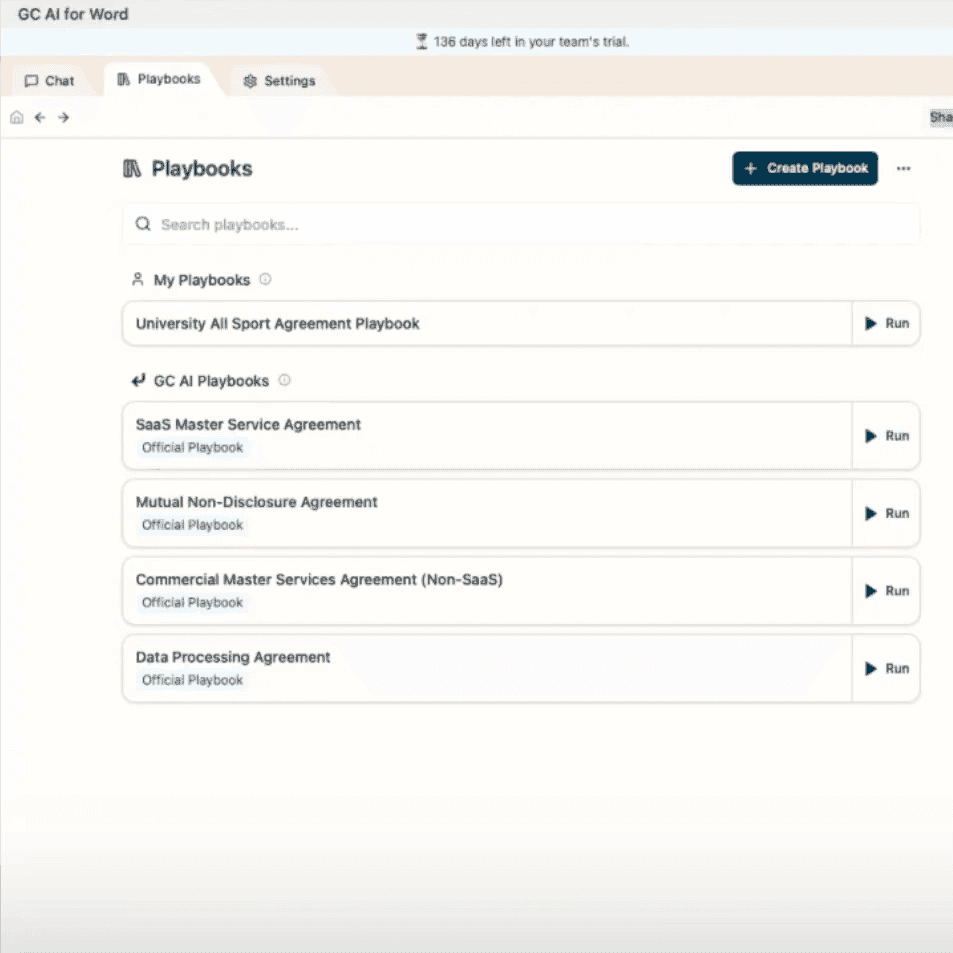
Playbooks turn contract standards into repeatable review
The bread and butter of in-house work is contract review, and it repeats. Upload your standard NDA, define your positions, and GC AI reviews every incoming agreement against them, flagging the issues that matter to your business rather than a generic checklist.
At the 2026 GC AI Summit, Taylor Robertson ran GC AI's SaaS MSA Playbook against a live $1M Atlassian agreement. In one click it flagged standard deviations and a unilateral modification clause outside the playbook's rules.
CoCounsel's Agentic Guided Workflows cover structured legal tasks with checkpoint logic: privacy policies, employee policies, complaints, discovery requests and responses, deposition transcript review. Strong coverage for litigation and policy drafting. GC AI's library is built around the commercial contracts an in-house team papers every week.
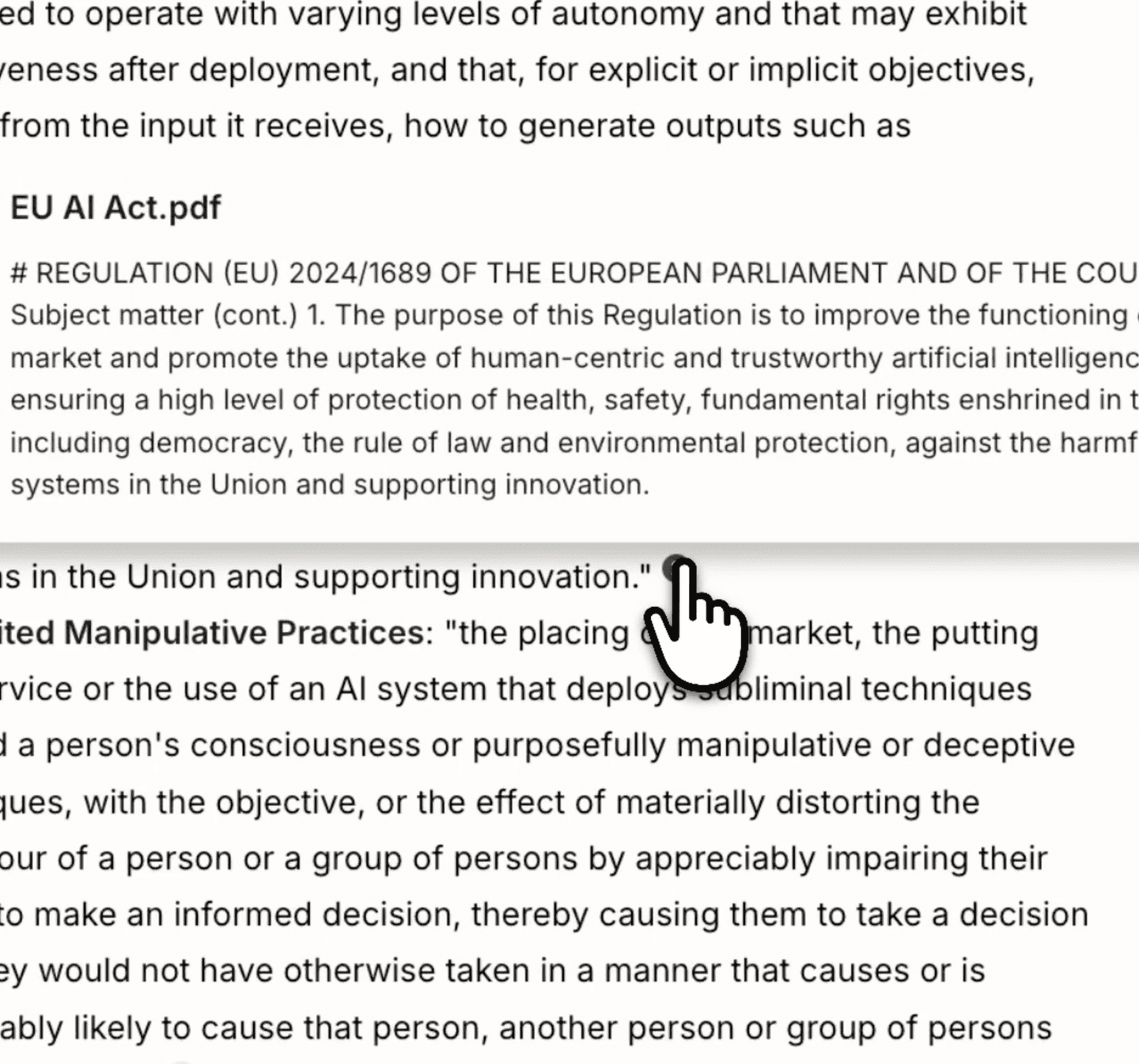
Character-level citation on every answer you forward
In-house, you are the final reviewer. No associate checks the memo before it reaches the CEO, the CFO, or the board, so verifiability is the bar that matters.
Exact Quote returns character-level citation. Every output links to the precise language in the source document, not a page number or a paragraph summary. Click the citation, see the source, verify in seconds, send.
Customers reported a 21% accuracy advantage over generalist AI. On GC AI's In-House Legal Bench, published in May 2026, GC AI scored 86.8% across 100 in-house tasks graded against 1,200+ attorney-developed criteria. That bench measured GC AI against general-purpose AI; CoCounsel was not part of the study.
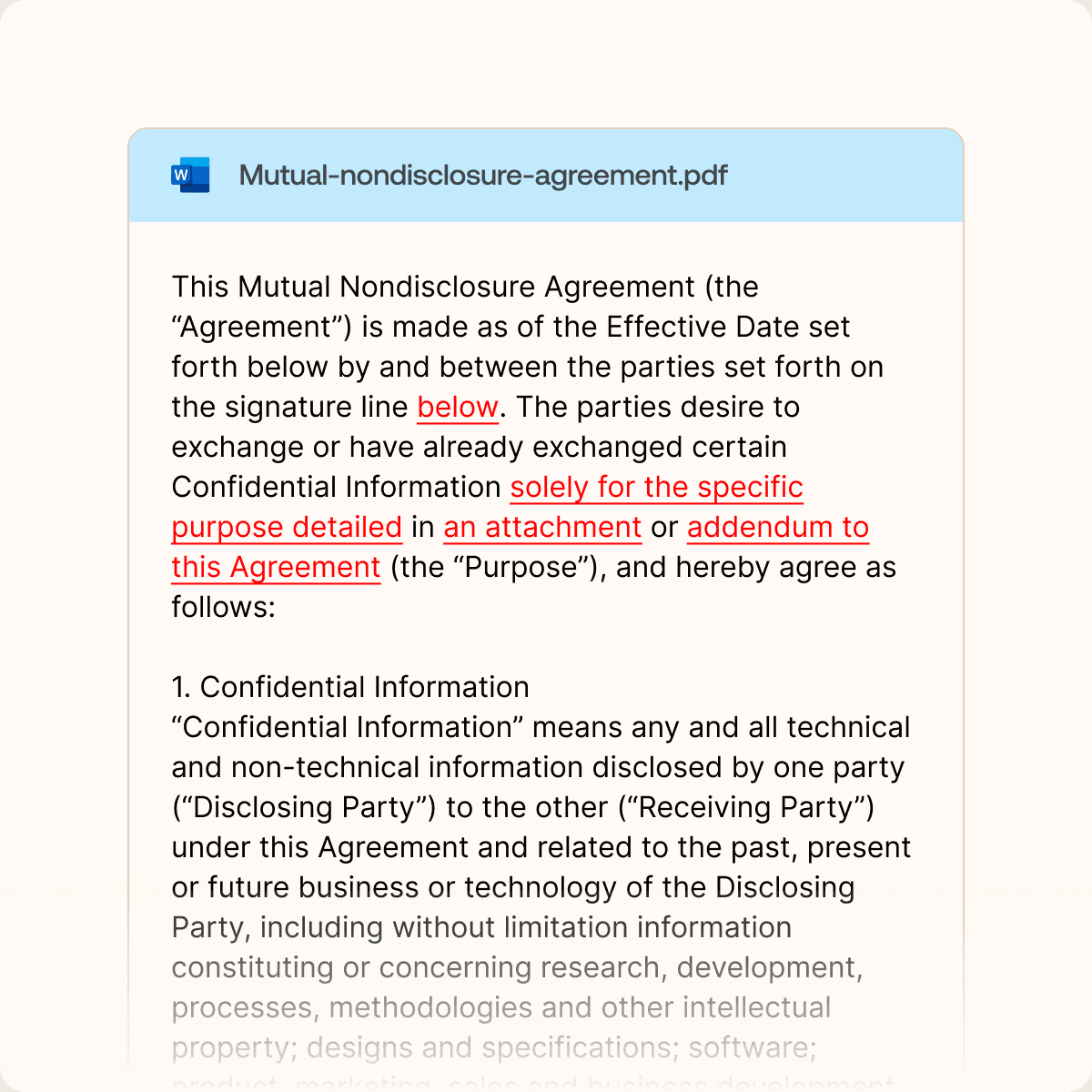
Research and redlining in the same Word window
GC AI for Word includes Chat2, saved prompts, Easy Prompt, and Projects. Pull primary law into a redline with Chat2. Run a Playbook against an incoming NDA. Carry matter memory from last week's draft into this week's negotiation. All inside the document.
What you start in the web workspace pulls into Word with one click, and the two stay synced.
CoCounsel is available inside Microsoft 365 for teams standardized on the Microsoft stack. Both work in the document. The question is whether the answer that comes back is written for a research deliverable or for the Slack message you are about to send.
Written for the CEO, not for the editorial style guide
Most in-house output leaves the legal department. It lands with executives, finance teams, procurement, or the board, and most of those readers are not lawyers.
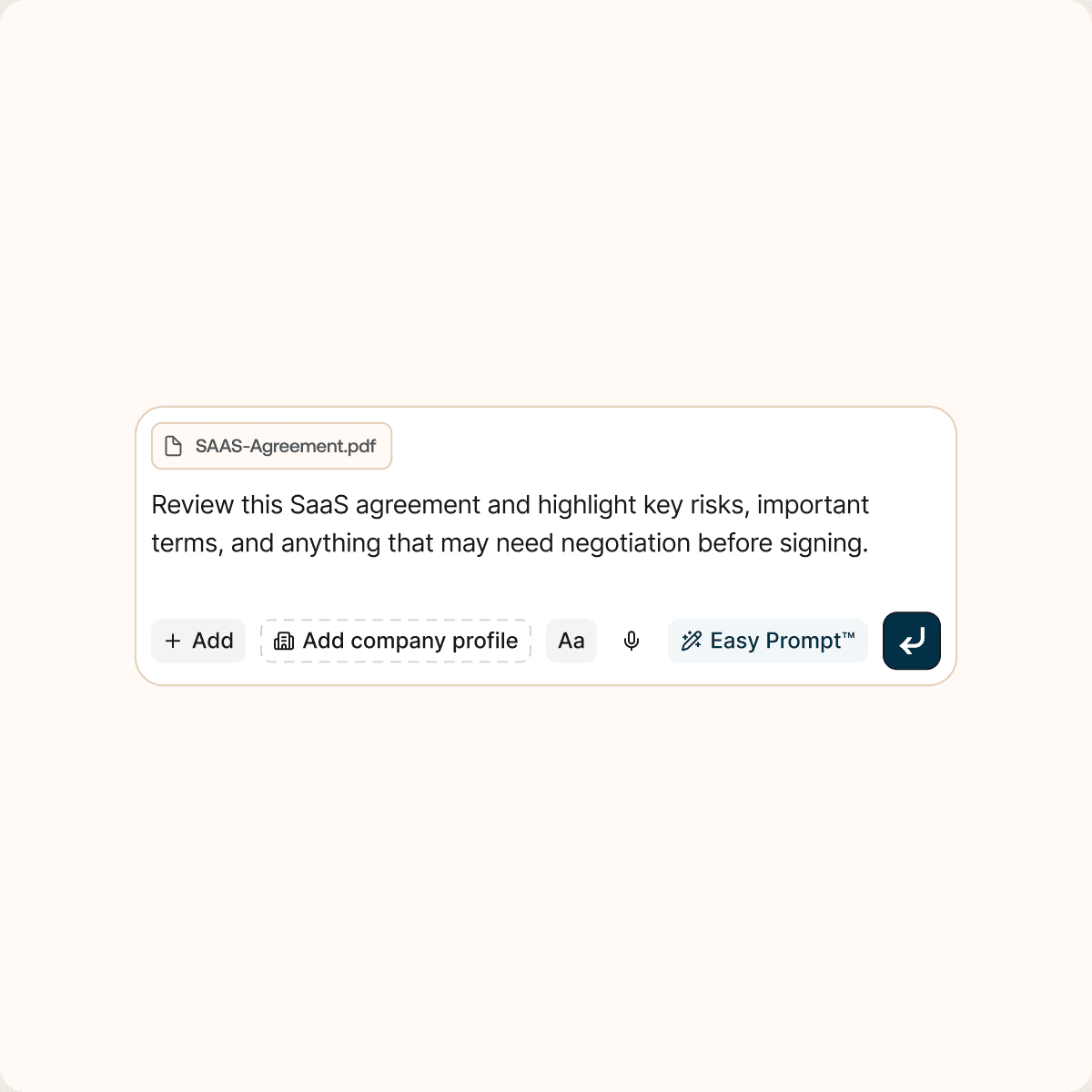
GC AI's 20,000-line legal system prompt produces concise, stakeholder-ready answers you can paste into Slack or drop into a board deck. Easy Prompt turns plain language into a structured legal prompt, so you do not have to be a prompt engineer to get there.
CoCounsel structures output around Thomson Reuters' editorial conventions, which is exactly right when the deliverable is a research memo that has to hold up in front of a judge or a regulator.
Free, CLE-certified training for practicing in-house lawyers
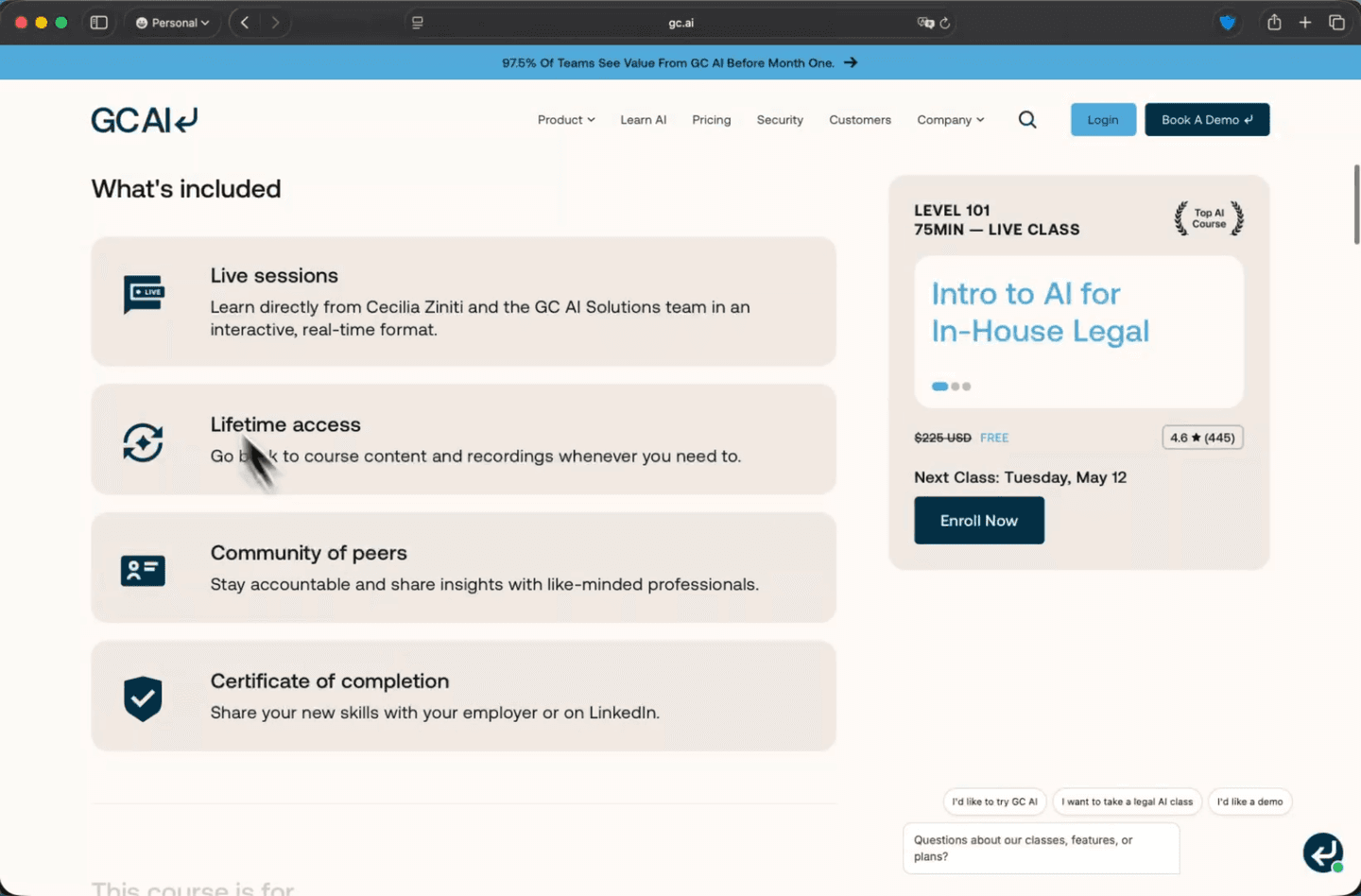
Departments that build AI fluency are the ones where adoption sticks. GC AI Classes are free and CLE-certified (California), taught by former general counsels, covering prompt engineering for legal work, AI-assisted contract review, and building internal AI adoption playbooks.
More than 6,000 legal professionals have completed the program, with instructor ratings averaging 4.7 to 4.9 stars.
Whichever platform you pick, ask what education comes with it beyond product documentation.
Watch a demo of GC AI by Cecilia Ziniti, CEO, Founder and 3X GC
What in-house teams say about GC AI

The GC AI Word plugin has transformed my legal workflow, allowing me to draft and review documents in a fraction of the time it used to take. What used to be hours of tedious contract review now takes minutes, with the AI instantly flagging potential issues and suggesting precise language improvements that align with our company standards and preferences. The seamless integration with Word means I can leverage powerful legal AI without disrupting my existing workflow, making it an indispensable tool for our legal team.
 Katelyn CanningDirector and Head of Legal Company
GC AI's Word Add-in is in a class of its own compared to other legal AI tools I have evaluated. Its ability to produce a first-pass redline of an agreement against our own templates has significantly reduced the time required to review non-standard contracts. Furthermore, GC AI's capacity to suggest market-standard compromises and provide clear, concise explanations for edits accelerates negotiations and fosters a more collaborative process between parties.

GC AI for Word has become an integral part of my workflow. Its integration into the online portal ensures seamless communication between the two platforms and helps ensure we're communicating with all stakeholders accurately and efficiently. Most importantly, I appreciate that GC AI continues to listen to their users and improves the software continuously.
 Sarah BrownleeContract Specialist
Today's victory: my board chair asked me a long time ago for an index of all board resolutions. I can only use the word “collaborate” to describe how I first worked out with GC AI how we were going to do this. I was also mindful of the possibility that GC AI might not be able to remember all of the content since I had about 50 PDF docs to summarize and put into a table. We first worked out what the table would look like, then I uploaded each one and it produced the output in table format for that one doc. And asked me for the next doc. After I uploaded about 10 docs one by one, I asked it to consolidate all the entries into a single table and put it in reverse chron order. It did. I praised it and then fed the rest of the docs one by one. At the end, it produced a consolidated table without any problem. And it asked me if I wanted it to do any more analysis on the data. I'm honestly stunned at how well this worked out. And I also feel like maybe GC AI is turning the tables by giving me positive reinforcement for the approach. That's fine. I welcome the robot army if they will do tasks like this.
In my experience over the last year, this is the best Legal AI product on the market for in-house lawyers, hands-down. Great work Cecilia Ziniti!
 David MorrisGeneral Counsel at Snyk
As a fractional general counsel for two fast growing technology companies, GC AI for Word has transformed how I handle legal document review and drafting. The integration is seamless, the AI suggestions are remarkably accurate for legal context, and it saves me hours each week. The beta testing experience showed a team that truly listens to user feedback. This tool understands legal nuance in ways other AI tools simply don't. Highly recommended for any legal professional working in Word.
 Mike BittnerGeneral Counsel
The GC AI for Word plugin has gone from a curiosity to an essential component of my workflow for contract reviews. The product team has been very responsive as we've identified new issues and proactive about adding new capabilities. It doesn't replace the need to think critically about every redline, but it cuts down dramatically on the time you need to spend on the easy stuff so you can focus on the issues that truly need your attention.
 Jacob TewesFractional Legal Counsel
GC AI for Word is an invaluable multi-purpose legal assistant. It streamlines document management by identifying missing or duplicated clauses while also handling complex document review with precision. The tool excels at flagging potential regulatory issues and enforcement risks, then provides targeted language to mitigate these concerns. As a legal professional, I rely on this tool daily for efficient document drafting and comprehensive review processes.
 Ora SheinsonCLO
Common questions
What Is CoCounsel?
How Much Does CoCounsel Cost Compared To GC AI?
Do I Need A Westlaw Subscription To Use CoCounsel?
Which Is Better For Legal Research?
Which Is Better For Contract Review?
Does GC AI Work In Microsoft Word?
 SOC 2Type II Certified
 SOC 3Certified
 GDPRCompliant
Get started today
2,100+ in-house legal teams chose GC AI. Run research, redline contracts, and brief your execs with the legal AI built by a 3x GC.
What to expect:
- A walkthrough of the platform, tailored to your team's use cases.
- Q&A session about security, integrations, and onboarding.
- A 14-day free trial if the platform looks like a fit for your team.