CZ and FriendsS1 E45
How to Build a Culture of Compliance: Varo Bank's CLO
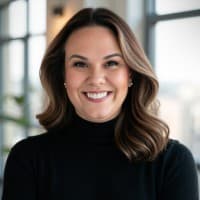
Marina Gracias
Chief Legal Officer and Corporate Secretary at Varo Bank
Episode Overview
When Marina Gracias joined Varo in 2016, the company had eight employees, no product in market, and a plan to become a bank. Ten years, a three-year de novo charter, and a Series G later, she is still its chief legal officer.
Building a culture of compliance in a regulated startup starts with legal refusing to be the department of no. Ask the business what it wants to accomplish, find the path that gets there within the regulations, and check how competitors have read the same rule.
Gracias hires for that instinct, and she says the payoff is direct. Once the business sees that legal will partner with it, it becomes more willing to comply.
About Marina Gracias
Marina Gracias is Chief Legal Officer and Corporate Secretary at Varo Bank, the first all-digital, nationally chartered consumer bank in the US. She joined in April 2016 as employee number eight and the company's only lawyer.
She led Varo's three-year process to win a de novo national bank charter from the OCC, the FDIC, and the Federal Reserve. The charter, approved July 31, 2020, made Varo the first consumer fintech to hold a full-service national bank charter.
Before Varo, she was a managing director at Accenture negotiating deals for financial services clients, spent close to six years as Chief Procurement Officer at Visa, and spent 15 years at Providian Financial, first as assistant general counsel and later as a senior vice president on the business side.
She holds a JD from Berkeley Law and an MBA from UC Berkeley's Haas School of Business, where she has served on the board since 2022.
Key Takeaways
- Legal cannot be the department of no: Gracias hires lawyers who ask the business what it wants to accomplish, then work out how to get there within regulations that usually leave more room for interpretation than a first read suggests.
- A bank charter is about owning the customer, the deposits, and the data: Most fintechs are a marketing arm for a sponsor bank; Varo's charter lowered its cost of capital, unlocked products like Zelle, and lets it use AI across the board because it owns the data.
- The charter took three years and close to a million dollars, against a 120-day estimate: The FDIC asking Varo to withdraw and refile was the low point, and watching competitors now line up for charters is the vindication.
- Generalists last longer in-house: Gracias went from securitization counsel to M&A and bank deals in the UK and Argentina at Providian, and that range is why she still had interesting work after the home equity portfolio was sold.
- Ask AI for the exact quote, then check it: Varo's contracts lawyer asks the tool where a point appears in the contract and for the exact language, and the product lawyer runs AI across every set of customer terms for consistency.
Chapters
- 0:00Customer First And Guest Setup
- 1:08Why The Best Lawyers Generalize
- 3:08How To Keep Growing In Place
- 5:40Leaving A Big Job For A Startup
- 11:58The Charter Process Gets Real
- 14:02Fintech Versus Bank Explained Clearly
- 17:54Building Product With Compliance Built In
- 24:02AI In Banking Legal Workflows
- 30:37Leading A Small Team With Trust
- 32:15Culture Of Compliance Without Being No
- 37:51Regulator Relationships And Customer Mission
- 39:59Lightning Round And Resilience
- 41:21Closing And Where To Learn More
Why Are the Best In-House Lawyers Generalists?
Because the work changes underneath you. A lawyer who has built range inside one field has somewhere to go when a business line is sold or a product retires.
She was hired at Providian as a securitization lawyer managing the home equity portfolio, and kept asking for other work. She does not mean hopping from employment law to litigation; she means range inside your field.
Gracias recalled:
I started doing work for the credit bureaus, I started doing M&A work. We opened a bank in the UK and bought portfolios, and then I did the same thing in Argentina.
When Providian sold the home equity portfolio and securitizations slowed, she already had other work to do. The same pattern has held across ten years at Varo, from the first financing round to the charter to every product since.
What Does the De Novo Bank Charter Process Look Like From the Legal Seat?
Longer and more expensive than anyone tells you. Gracias and Walsh met with the OCC, the FDIC, and the Fed before filing, and every agency said the application would be done in 120 days.
The low point came when the FDIC realized it could not work in parallel with the OCC.
Gracias said:
They said, withdraw your application and come back later. I was like, oh my god, this could take us a lot longer than we thought, and would become way more expensive than we thought.
The process took three years and close to a million dollars, while competitors without charters kept shipping. Even after the charter arrived, the second-guessing did not stop right away.
What settled it was what the charter made possible:
But then you just see how it helps you control your destiny, you're able to control your data, you're able to offer so many more services, your cost of capital and all is lower.
Now that the OCC has opened the chartering process back up, she watches competitors line up for the same thing. That, she says, validates the decision.
What Is the Difference Between a Fintech and a Chartered Bank?
Ownership. A fintech without a charter is, in Gracias's words, a marketing arm for a bank. The sponsor bank owns the customer and the deposits, and the fintech borrows from the outside market to fund operations.
A chartered bank owns the customer relationship and the deposits, works directly with the Fed and the regulators, and can offer products a fintech cannot. Zelle is her example, because only a bank can offer it.
More importantly, you control the customer relationship, you own the data.
Owning the data is what turns the charter into an AI strategy. Varo has used machine learning in underwriting for years, and the charter means generative AI can run across the whole business.
Gracias explained:
We can use it really much more across the board because we own the data. And when you're fintech, you don't own the data, the bank owns the data.
What Does a Solo Lawyer at a Regulated Startup Do All Day?
The law and the business, at the same time. Gracias has only worked in financial services since leaving private practice, so regulation on everything is the baseline, and the startup added product work on top.
She said:
All lawyers need to learn, you work business and you work the law. You have to understand the product, you work very closely with the engineers.
The surprise was the vendor ecosystem that exists to support a bank: one startup ran Bank Secrecy Act identity checks instantaneously, and another took an imprint of the customer's phone to flag a device claiming to be an iPhone it was not.
The solo lawyer also sees everything the customer sees:
When you're the solo attorney in a regulated environment, you learn marketing scripts, you look at screens to see everything the customer is going to see.
How Is a Bank's Legal Team Using AI?
For the drafting that used to eat hours, with a human reading behind it. Gracias expects most bank charter applications are now drafted with an AI tool, because the public portion of every application is public and similar lines of business use similar language.
The same logic applies to policies:
Most bank policies are fairly standard. Again, why wouldn't you use an AI tool to create all the policies? A human will go back and look at it and make sure if there are changes that need to be made or make it more specific to your company.
Her favorite use case came from Varo's product lawyer. Customer terms for different products get written at different times by different people, so she runs an AI tool across all of them for consistency.
To make sure that even if they're written at different times, even if they're written by different people, they're consistent for the consumer. And so there are all these different uses that before would have taken somebody hours to sit and read all the terms.
She is not naive about hallucinations, which have already put more than a thousand lawyers in front of sanctions orders. Her contracts lawyer has a simple guard when she asks for a contract summary.
To also make sure that the tool doesn't create and tell her what the tool thinks she wants to hear, she asks the tool, give me the references of where does this occur in the contract, or give me the exact quote of the language.
I think all lawyers will have to adapt to using AI in order to make not only the job more efficient, but I think in many ways it helps the lawyer do a better job.
How Do You Build a Culture of Compliance Without Being the Department of No?
Start by convincing the business that legal will listen. Cecilia raised Uber, whose early model treated the law as a cost to absorb after the fact, and Gracias noted that a chartered bank cannot do that, because regulators can issue consent orders and come down hard.
Her answer is to hire lawyers who ask a different first question.
Somebody who is more likely to ask the business, tell me what you want to accomplish. So don't focus so much on how they come to you to tell you, I want to do this. Try to figure out, what's your ultimate goal? What are you trying to do? And then work with them to figure out how we can do it within the regulations we have.
Banking regulation is sometimes cut and dry. More often it is open to interpretation, and the work is checking how it has been read and finding the version of the plan that fits.
The second move is benchmarking. When the business says a competitor is already doing it, look at how, because sometimes the competitor found an interpretation that works.
The third is what the first two produce:
Once you show the business you're willing to partner with them, it makes them more willing to want to comply.
Varo has lived with the bank-versus-technology-company tension for years, and her position is that you can be both if legal stays flexible. For the in-house teams building the monitoring and policy-alignment half of that culture, the AI for Legal Compliance guide picks up where this episode leaves off.
What Advice Would a Bank CLO Give a New GC in a Regulated Industry?
Build the regulator relationships before you need them. Cecilia asked for two sentences of advice for Molly Abraham, who stepped into the Coinbase general counsel seat this summer, and Gracias gave her the playbook Varo ran during the charter.
You invest the time to meet with them, to get to know them, and also create a level of trust with them so that they can feel comfortable that when they meet with you, you will be open, you will talk to them, you will explain things to them.
Varo was in the cloud with no branches, which the regulators had not seen before, so the team spent the time explaining security and how customers would reach their money. Regulators are still learning your business, and being a sounding board for them pays off when something goes wrong and you pick up the phone.
The second piece is the one she opened the episode with:
Always put your customer first. Always think, are you meeting your mission of what you were established to serve your customer?
If you are the first lawyer in the door at a regulated company, or the one asked to find the yes, start with GC AI's legal AI classes, or try GC AI free on a set of customer terms today.
Recommended Reading
- AI for Legal Compliance: The In-House Guide (2026): how in-house teams use AI to track regulatory change and align contracts with policy, the work Gracias describes running across Varo's customer terms.
- Built to Last by Jim Collins and Jerry I. Porras: the one book Gracias named on air as having shaped her, a fit for a CLO who picked a ten-year build over a faster exit.
Transcript
Marina Gracias0:00
Always put your customer first. Always think, are you meeting your mission of what you were established to serve your customer?
Cecilia Ziniti0:07
Today's guest is Marina Gracias. She's the general counsel at Varo Bank. If you haven't heard of Varo, they're the first and only digital-only nationally chartered bank in the US. They went through the Office of the Control of the Currency, the FDIC, and the Federal Reserve and got a de novo bank charter. Now, those of you who are lawyers and especially financial services lawyers will appreciate that is a very big deal. No one had done that in FinTech before. And Marina was the one who ran that process from first lawyer in the door through to literally Series G today. Before Varo, she spent close to six years at Visa running global procurement, and then Accenture as a managing director. And before all of that, Marina spent a decade at Providian, first as a lawyer and then on the business side. She's also, fun fact, on the board of the business school and Hawke School of Business at UC Berkeley. As an alum, this makes me quite excited. Let's dive in with Marina. Excited you're here. Thanks for having me. Of course, let's dive in.
Cecilia Ziniti1:08
So I want to start with um dive right in something you believe about the legal profession that a lot of people would argue with. Um I strongly believe this one, so I don't think it's a spicy take, but let's dive in. You believe that the best lawyers are actually generalists, and being a generalist is an advantage, even with the alphabet super regulators you're dealing with. So unpack that a little bit.
Marina Gracias1:33
So I think what what's good about being a generalist is you get to experience so many areas of the law. And and I and I should say when I mean generalist, let's talk about like I don't mean going from human resource law to being a litigator to being a corporate attorney. But for example, within corporate, I would encourage everybody to try to get as much experience in all the different areas that you can get exposed to. I think sometimes, so I'll give you an example. When I was first hired at Pramidian, I was hired to be a securitization lawyer and manage their home equity portfolio as being their counsel. And often I would ask people, like, do you have other work for me? Do you have other work for me? And I, my knowledge, I grew, I grew as an attorney, I started doing work for the credit bureaus, I started doing MA work. We opened a bank in the UK and bought portfolios, and then I did the same thing in Argentina. And it was great. I had you know a broad experience then in different areas of the law, all within banking, but you know, different areas within banking, and it did help because eventually we sold the home equity portfolio, and securitizations kind of we did weren't doing as many. But you know, I had started doing so many other areas of the law that it became really helpful because I could find other things to kind of do in Providian, and then as Providian grew, I could continue growing in different areas.
Cecilia Ziniti3:08
So what else that the idea of switching up what you do every few years? Like, I I frequently for me on the hiring side, it's like I don't want people that have had the same three years of experience, you know, five times. That is not 15 years experience, that's three. So is that what you're talking about? And like, was it intentional? Did it just happen? You mentioned the sale of the of the mortgage business, like what two-part question. Like, do you have to be intentional about switching that up? And then how were you intentional about it?
Marina Gracias3:47
Yeah. So I do think people should be somewhat intentional. I don't think I was, I think I was just lucky that I had you know grown my portfolio of knowledge so that as the company evolved, I still continued having a role and the work was still interesting. And I think all through my career that has happened, you know, and people ask me, like, even at Varro, like I've been there 10 years now. Like, how could you be there 10 years? And I think at every company where I've stayed that long, it has been a different journey each time. So when I joined Varro, I was like employee number eight. It was before we had a product in market, and I was the solo attorney. But I got to learn how to work with the engineers, how to do product development with them. Um, we did our first financing round, like within 30 days of my being there. I got to, and I'd never done fundraising, I got to work through the financing documents. But then, you know, VARO continued to evolve. It grew as a fintech. We did a sponsor bank, but then we decided to do the bank chartering process. And we went through the bank chartering process. At the time we did it, it took us three years. Now the OCC has finally decided to do it faster. But then we opened the bank. I mean, not many people are gonna probably say they built the bank from the ground up, but we had that experience. And then, you know, and then we've continued as we brought new products to market. So someone, even if you stay at the same company, I would highly recommend seek out new opportunities. So you don't have to move companies, but you do continue to learn. Now, I will say, but there are people I like to continue to learn and do different things. There are probably some people who want to just do the same thing and they're comfortable, and that's how they want to do it. But just not my cup of tea, kind of thing.
Cecilia Ziniti5:40
Yeah. Um, so I guess here's a question is like you walk in as the eighth employee at a company that is gonna be a bank but isn't yet. What were you thinking? Like, I'm kind of like you were this like super successful lawyer, it's a crazy story. Like, I think we all kind of want that, but but I I it it it's this like you know, the the amount of risk uh reversion that all of us have, but also like do you have faith in that moment that is gonna work? Like, like just put us in your shoes at that time.
Marina Gracias6:15
Yeah, so first of all, you have I was a partner at Accenture, I gave that up to become the eighth employee at the startup.
Cecilia Ziniti6:22
Now, I I think the background for the listeners, like partner at Accenture is like we're talking probably seven-figure comp. Like you're talking like it's a it's a big job. Okay, so contrast that with employee number eight at a startup. All right, so so set the scene. So, all right, so we're there. So, so continue.
Marina Gracias6:40
So, to so to begin with, you uh you know, for most people who've started at startups, when you're that young, you're coming in actually as a consultant, you're not even an employee, you are a consultant. But I think what really made me want to do this is the fact that I wanted to do something different. While I enjoyed my time at Accenture and it was a great company, I just felt like I'm getting bored, I'm doing the same thing. And the the job I had at Accenture was a very unique job. It was a deal negotiator. You were dropped in, you negotiated a deal for somebody when they were hiring Accenture, and then you left and you went on to do your next deal negotiation. It is a very lonely position because you just drop in, you work with people, you're dropped out. And so I really miss the relationship. So I asked a friend of mine who happened to be an executive recruiter who I worked with, who I worked out with. She and I went to the same health club, and I said to her, I've not looked for a job in like 20 years. I've been following people, every job I've gotten has been built through a relationship. I don't even know how to go about finding another job. So she and I talked about you know what I was looking for, and she said, I know of a startup that's just starting. I don't even know if they want a council, but you know, the recruiters all were somebody from Lending Club. And I said, Oh, I know the Lending Club recruiters, a lot of them originally came from Providian. And sure enough, I knew the recruiter, and then I knew one of the other co-founders, he was also from Providian. So he said, Come on over, you know, I'll tell you what we're going to do. And he came over to Accenture and he kind of whiteboarded what they were doing. And it's a mission-based, it was really to help people who had been left out of financial services really build a low-cost banking product that would include them in the banking system. And I thought, I want to be part of this, I want to be part of sort of like giving back now. And he said, come meet our CEO. And I will tell you, Colin Wall, she was the founder of the thing, had run Amex in Europe and had just come back to the US. So that's the other thing that kind of gave me comfort moving. It was a startup that was built by bankers, people who understood the law and would understand what it needed to have happen. So, anyway, I met Colin for coffee and he said, I'd like to continue the conversation and maybe have you come over. And I said, I'm going to Dubai on vacation, I'll talk to you when I come back. And he says, No, no, no, let's continue talking. And then we just talked for that one day, and then while I'm on vacation, he's sending me stuff to would you look at this, would you look at that? And I really got enamored with the work. Came back, resigned from Accenture, and joined him. So I think two things that probably gave me comfort for like taking the leap was this was a group who knew what they were doing. They were bankers, they knew what it would take to, you know, offer financial services. And I guess I took the leap thinking, you know what, if it didn't work out, I'd have to look for another job. But you know, sometimes you just have to take the leap of faith that it'll work out. And I and I will say, maybe the other thing that sort of gave me comfort of doing that through my career I've often had where things didn't work out the way I wanted to work out, and I'd have to take a different path. It has always been the better path in the end. So I think I kind of had that faith that you know what, if it didn't work out, that's okay. I'll find something that will be even better for me.
Cecilia Ziniti10:16
Were there um so skipping to the the a little bit the denoua, basically Vero has raised uh raised a Series G funding round $240 million? You've raised in the hundreds of millions, you serve millions of um of customers, and it it's been uh a smashing success by and large. When did you know that it was going to be successful and that your faith that you had in taking the role was paying off?
Marina Gracias10:50
Well, I think it became it I had the faith fairly early because our original Series A investor was Warburg Pincus. So, you know, very large global private equity firm who believed in the company. And at the time they invested, our Series A was 27 million. That was the largest Series A that had been done in fintech at that time. So I guess part of what gave me the faith was just the fact that a large PE firm who had done a lot of research in the space had chosen Varro to put their bed behind. And I am really a relationship-driven person. I really liked everyone at the company. I liked the people we worked with, I had great faith in the management team, and I think that really goes a long way.
Cecilia Ziniti11:38
Was there any crisis or moment of doubt? So you raised the Series A, you know, champagne bottles all around. Um, you know, presumably you go to New York, it's, you know, I'm picturing smoke-filled rooms. But after that, were there moments, was there any moment of doubt that stands up in your head?
Marina Gracias11:57
I think
Marina Gracias11:58
the probably one of the early moments of doubt. So when we first started wanting to go through the bank chartering process, Colin and I went and we met with the OCC, we met with the FDIC, and we met with the Fed. You know, and nobody had done this like in 10 years. So everyone was kind of a little rusty on how to do it. And every one of them said, Don't worry, in 120 days you'll have your charter application done. And we filed, and then as they started going through it, it was like the cobweb started going away from them, and they realized, wait, this is a little more complicated, and they started asking for more and more documents. And I think the first time the FDIC suddenly realized they couldn't work in parallel, they had to come in a later process, and they said, withdraw your application and come back later. I was like, oh my god, this could take us a lot longer than we thought, and would become way more expensive than we thought. I think we ended up spending almost a million dollars in the end just on this, and you know, it was a lot more than we anticipated, ever spending, and three years was a lot longer than we anticipated. Yeah. And so all during this, and you're watching other fintechs that are also there that are not going through the chartering process. So even after you get the charter, you know, you're thinking, you know, yes, we're happy we have it, and we're opening the bank, but we're also watching our competitors all doing it without the charter. And so it may it does make you second guess, like sometimes should we? But then you just see how it helps you control your destiny, you're able to control your data, um, you're able to offer so many more services, your cost of capital and all is lower. And now, as the OCC has opened up the chartering process, is just watching all the competitors line up to now get it, and that sort of validates yes, we did the right thing.
Cecilia Ziniti13:55
So this, like, so so for those of us who who maybe aren't, you know, assume that that we're smart lawyers listening and we're not necessarily
Cecilia Ziniti14:02
familiar with the charter process, what's the kind of like door number one, door number two thing? And when you say fintech versus bank, like, you know, explain to me like I'm maybe not five, but explain to me like I'm 14 what what what what that difference is and and how why it was such a big decision.
Marina Gracias14:22
So most fintechs are not a bank. They are really a marketing arm for a bank. And so they don't own the customer, the bank owns the customer. They don't really own the deposits, the bank owns the deposits, so that their cost of capital they're constantly borrowing from the outside market actually to run their operations. Now the bank is probably sharing an income with them, but it's not the same. As a bank, you own the customer, you own the deposits, you work directly with the Fed, you work directly with the regulators. Take something simple as Zell, which a lot of people use to move money. If you're a fintech, you can't offer Zell because Zell can only be offered by a bank. So we can offer our customers Zell. You know, we we can work with the Fed. And so we have access, we can put deposits with the Fed, we can, you know, um work with them, and so it you just get so many more access to things, but it gives you more access to the products. More importantly, you control the customer relationship, you own the data. So, even for example, you know, speaking of AI, we use AI, you know, we've always used um large language models like in underwriting. And now when we use generative AI, whether we use it for data models or for things like that, we can use it really much more across the board because we own the data. And when you're fintech, you don't own the data, the bank owns the data.
Cecilia Ziniti15:53
And so that's really it's a it's kind of like I mean, we have with there's a lot of situations like this in tech where it's like, you know, this is this is probably dates me, but I was at you know, Yahoo when it was like, do you own the map data? And then it was like, you know, Navtech, and you know, Apple spent, you know, in the billions to build Apple Maps, and it's still not that good. But, anyways, um, this idea of owning your data and owning the relationship, to me, it it kind of puts it's not surprising, I guess, then that Vero would hire a really high-powered lawyer as employee number eight. So, do you feel like you're in basically product development then in that in that scenario where the legal side of being able to, you know, to move money legally, obviously, and being able to to do it without without a a back end and only the fintech side being the marketing arm? You know, it it means that you're I mean, obviously more than just a lawyer, but what does that mean? Like, what does it mean to be in-house in that scenario? Are you effectively kind of like the number two to the CEO? Or like, like, tell tell us about that. Because I I think for me from a career standpoint, I think it'll be interesting to our listeners. I worked at one regulated industry company. I was a general counsel of an education company that it was an interesting business model, but essentially it was called income share agreements, where you would take a percentage of people's income that uh that they achieved having attended the school. And so it hit lending law, it hit education law, it hit um you know, employment law, it was very highly regulated. And I'll be completely honest that after that job, I'm like, I'm not gonna be a GC in regulated industry again. Like I literally was like, I'm not doing it. And at that time, I was already thinking about moving more to the business side, which of course obviously I've done, but curious, like when you are literally the regulation is is kind of like existential to the company. What is it like to be a GC there? Is it more of a business role? Do you like that? You know, talk talk to talk to us about that.
Marina Gracias17:53
Yeah. I
Marina Gracias17:54
I think to begin with, because I've always once I left the law firm and went in-house, I've always done financial services from Pravidian to Visa, even Accenture as financial services and Navarro. So I think part of that also then makes you very comfortable with working in a regulated environment. You know virtually everything you do, there's some regulation around it. So you you sort of have to have that comfort level of knowing you've always got to think through the regulation. But I think moving to a startup, you learn to, or all lawyers need to learn, you work business and you work the law. You have to understand the product, you work very closely with the engineers. I think for me, one of the most fascinating things about moving to Varro was there was a whole ecosystem, really, of all startups, that existed that were, you know, working. I was very surprised when I came to Varro and we were developing the app to find out we could check BSA instantaneously through another startup vendor who had you know developed a whole database you know to be able to check for BSA. And BSA is the Bank Secrecy Act. And when you open a bank account, you need to really sort of verify the person's identity, and you could do it instantaneously. And that was like fascinating. Like, oh my god, there are vendors that do this. The other thing is we take an imprint of the phone. There's a vendor that we will connect to who will take an imprint of your phone as you're connecting to us and will verify it's a valid phone. And they it's it it to me it was fascinating, and that they can verify, like you say you're logging in from an iPhone 16, but your IMEI is not related to an iPhone 16, it's related to a different type of phone, which then immediately alerts you there's something fraudulent about this phone. So every time somebody logs in, this these kind of checks can be run. So to me, it was also fascinating learning about the whole ecosystem that kind of was supporting the bank, but that existed out there. That when you work in the larger companies, you have no reason to know any of these other people exist. And so, yeah, so it does kind of make you cross over and you learn a lot more about the product and the business. And then when you're the solo attorney in a regulated environment, you learn marketing scripts, you look at screens to see, you know, everything the customer is going to see.
Cecilia Ziniti20:25
So I I you mentioned fraud. I in financial services, like obviously fraud is the big like the biggest, one of the biggest business issues that you deal with. And I I had such fun reading the there was a book about it, I think it was basically like the story of Uber. And I think it was um uh you know, one of one of the interesting things they talked about was just the extent and variety of the fraud that was dealt with. So they literally had people where, you know, to your point on the phone detection, they would find out if the phone was shaking, right? Because that was kind of like, okay, they would use the accelerometer in the phone to tell if rides were actually being ridden. And one of the fraud mechanics was literally you could buy like a effectively a simulator that you could sit at your desk that would kind of shake the phone. And you know, and that was like one avenue, but there were thousands, and it was this like you know, interesting cat and mouse game, and you know, it was a whole chapter with their head of security. I guess like with that background, like would you say that that role of like of of being the general counsel or the person uh you know ultimately responsible for compliance at a fintech, you know, to try and kind of building this from the ground up in a very check forward way? I mean, is it a fun job? Like that give us give us more more avenue to the fun. And then do you just how do you avoid the frustration of that of that whack a mole? Because like literally for us, like you Mentioned Zell, like I mean, we've got state AGs looking at Zell and the fraud that it's possible. Um, there is a anyway. Is it fun? And then how is it not crazy frustrating?
Marina Gracias22:12
So it is fun because you're constantly learning about new things that are going on there. Um bringing new products to market to really help our customers is fun because you can kind of think what products and designing products, and you know, it's the product managers who design the products, but then helping them actually get them in a framework or in a way that can actually be marketed is interesting. Um but I think what is frustrating is to find out there are fraud actors who are just always ahead of people. So I we went to an OCC presentation just about two days ago, and they had a whole presentation on cybersecurity. And one of the things that there was a whole talk about AI and how AI is helping, you know, there could things about AI because like you know, it helps us be able to service our customers and all better, but there's a bad side of AI too, which is the fraudsters are using it, whether they're using it to help do phishing into the companies, taking over emails, um getting your voice imprints so that they can, you know, do fake calls to people, you know, asking people to wire money, things like that. So it's always sort of a cat and mouse game going on with the fraudsters and with the tools that can be put in to help detect it. Because you're right, just like your example of Uber, the banks are always kind of looking for are there, you know, you look at fraud attacks. Are there people who are logging in, but the amount of times they're logging in just is not really reasonable? Like people don't even type that fast. So you look for things like that. All right, let's
Marina Gracias24:02
see.
Cecilia Ziniti24:02
So I want to switch gears a little bit and talk about AI. Um, you have seen a lot of technology waves in your career, I mean, including literally the rise of fintech. I think fintech, the category name, was probably created in your time. How do you see, particularly in in your industry, financial services, how has tech changed things? And maybe it hasn't, but has it changed what you sell, what you do, how customers experience it?
Marina Gracias24:39
Yeah. So I mean it's it's sad sometimes when I hear people are so nervous of AI because they worry about AI taking their jobs, you know, and I and I truly am of the belief AI, you know, may some people's job may be eliminated, but I think the majority of the people, their job will be changed, but changed in how you do your job. And you know, so we've seen AI be used, and in many ways, AI can be used to better serve a customer. So and and and I know for a lot of people, sometimes they're frustrating experiences with chatbots because a particular vendor's use of AI may not be the best thing for the way they're using it for the chatbot, but in other ways, sometimes for a very simple customer request, the AI tool can provide them the information they need quickly and you know solve their problem more quickly. You we've seen AI be used to help create, you know, you see people marketing scripts, marketing materials can be created so much faster. So the velocity of being able to bring new products can increase with it. You know, even you know, when you talked about the bank chartering process, and this is really even for legal, I would not be surprised if many of the charter applications that are used that are created these days have been have an AI tool has been used to create them because it just makes no sense not to do it that way. There is a public portion of your bank charter application that's available. Why wouldn't a lawyer who needs to write a the public portion actually go look at what a lot of people who have similar lines of business have used? I mean, there's no reason not to do it that way. Umks have to have policies. Most bank policies are fairly standard. Again, why wouldn't you use an AI tool to create all the policies? You a human will go back and look at it and make sure if there are changes that need to be made or make it more specific to your company. But again, why wouldn't you do it that way? I would think most people use customer communications, the first drafts of your customer communications. I think most people use AI tools. Even my product lawyer told me the way she, you know, one of the things she started, which is really a good way of using it too, is we have customer terms, you know, that go out for the different products. Um, you know, but different products come to market at different times. So you write terms at different times. And I may have written some of the terms, she may have written some of the terms. But she's using an AI tool to now go and look at all our terms for consistency. So to make sure that even if they're written at different times, even if they're written by different people, they're consistent for the consumer. And so there are all these different uses that before would have taken somebody hours to sit and read all the terms to look for consistency, we can have it done very quickly.
Cecilia Ziniti27:48
So it is funny you mentioned that about AI for customer comms. I was noticing that just as a consumer, you get terms of use updates and they're better since AI, actually. I I I I I've been I've been impressed is actually that like writing, you know, plain English things, and I mean that's actually something we do at GCAI is like, you know, this idea that AI can help you take make communications better, land the message better with any stakeholder, like not just internally, but also uh consumers. And your point about like it it it's kind of like yeah, you know, could you, you know, calculate numbers by hand, but like why would you? Like, yeah, you you know you can, but like why? And so I I I love that. On the on the kind of tech waves side, so basically it sounds like you're you you you advocate for a version of Jevon's paradox, which of course, you know, fancy term, but basically when things become available, people use more of them. So you're saying there's gonna be an explosion of new products, new ways to encounter financial services, and basically, therefore there will be more work for lawyers and we're all fine, or like what's the what's the kind of therefore?
Marina Gracias29:04
I think lawyers will have to learn to adapt the technology to figure out the best way to use it. I mean, we we also see, you know, because we're consumer-facing, we have customers who write to us, and some customers choose to use an AI tool to write their complaints. Because you can sometimes it helps them, they're better written, they're more precise what they want. Sometimes they've used it to throw the kitchen sink of every regulation that might be touched on them, might be in that letter. Um so it but it's so eventually it's trying to find the right basis for it. But I think all lawyers will have to adapt to using AI in order to make not only the job more efficient, but I think in many ways it helps the lawyer do a better job. Now, we all know about hallucinations, and so you do have to check for it. But there are many ways, like so. My person on the contract side, the way she when she wants summaries of the contract done, to also make sure that you know the tool doesn't create and tell her what the tool thinks she wants to hear, is she asks the tool, give me the references of like where does this occur in the contract, or give me the exact quote of the language. So I I think you know, all the things where people say why they don't want to use AI, I think we can find ways of addressing it to minimize the things that could be wrong with the use of AI.
Cecilia Ziniti30:37
How do you keep your team performing at a high bar?
Marina Gracias30:41
So I think part of it is that we have a very small team, but part of it is also encouraging people to sort of choose how they want to work. And what I mean by that is I'm if I if I ask you to review a contract or if I ask you to support the business, I don't tell you how to do it. I'm assuming I'm hiring smart people who will know how to do it and will know how to raise their hand and ask when they have a question or ask for when they would need help. And yet at the same time, you know, we hired a very junior attorney, and one of the reasons for hiring somebody very junior was there's always work for a very junior person to do, and it helps them learn. And if there's somebody who's willing to say, I want to work across different areas, whether it'd be product, whether it'd be corporate, whether it'd be litigation, and they want to learn across, but then it's helping provide the right level of guidance to that person. So it's sort of also understanding the skill set of the person and kind of where their knowledge level is, and to the people who need a little more guidance, you know, providing a little more guidance, but learning when you need to pull back and kind of let them do it. And then the most important thing is if there is a mistake made, kind of help them learn from it, but it's not a punishment time for somebody. And then realize, you know, if it's something it's you stand up for your team and you say legal made a mistake, you don't point out boo and legal made the mistake. It's we made the mistake, we will own it, we will correct
Marina Gracias32:15
it.
Cecilia Ziniti32:15
Does um how do you create a culture of compliance or like a, you know, so one of the things that the Uber book gets into is that okay, the fundamental business model of Uber was in some ways illegal, right? That like it was required to have, you know, taxi charters or medallions or whatever it is, depending on the city, but they had such strong, you know, product market fit and pull because it was so convenient, it was so clear that the technology was leapfrogging what existed before, that that was a legitimate way to do business. And I and I don't think you know anybody looking at the business would have said, no, no, no, you should have been more compliant, you know, work with taxi companies, whatever. Right. Um that's you know, not the case if you're choosing to be a regulated bank. And so I suspect there is something culturally like the people that you hire or the people that you promote, and you know illegal obviously is a place to start it, but you're you know, you're an executive at the company. Put us in the room when it's like, okay, how do we how do we create that culture? And maybe it was intentional, maybe it wasn't, but uh give us a little bit of insight on that.
Marina Gracias33:25
Yeah. So I I I will say, I I think in a way Uber is sort of the ultra example because everything I've heard is they believed more in pushing it. Doesn't matter if they break the law, they'll take the consequences and they'll figure it out on the back end. Yes.
Cecilia Ziniti33:41
Well, you actually sort of like FedEx, right? So, like, I mean, look, FedEx is a great business, but if you look at it from an economics standpoint, it makes more sense for them to pay parking tickets and deliver packages than it does for the driver to drive around for 20 minutes or whatever trying to deliver the thing, right? So it's kind of like an economics thing. So I'm with you, Uber is has taken that extreme view. I'm assuming in banking you can't do that. So what do you do instead?
Marina Gracias34:08
Yes, you know, banking because you have a charter, you're regulated, the regulators can give you consent orders, you know, can actually come down very hard on you. So I I think the way we did it was from the very beginning, trying to get the business to understand that legal was not the department of no, that we would listen to you. And so, what I often tell my attorneys, and I try to make sure when we hire, we hire for this, is that somebody who is more likely to ask the business, tell me what you want to accomplish. You know, so don't focus so much on how they come to you to tell you, I want to do this. Try to figure out what's your ultimate goal? Like, what are you trying to do? And then sort of work with them to figure out how we can do it within the regulations we have. Because a lot of times, at least you'll find in banking, the regulations sometimes are very cut and dry. A lot of times it's up to interpretation. And you do have to look, you know, have has this been interpreted, how has it been interpreted? But you usually will have some leeway to figure it out. But you have to be flexible to work with the business to say, well, you can't really do it this way. But you know what, if you're willing to do it this way, you can. And I think the other thing that as lawyers we have to be really open to is looking at how competitors are doing or what they're doing. Um because you know, the first thing your business will tell you if you say no, you can't do that is, well, you know, just like the kid who says, Well, so-and-so is doing it. And sometimes it's worthwhile looking at how the competitor is doing it. I mean, I oh I oh go ahead, sorry. No, no, because sometimes maybe they've interpreted or they found an interpretation that works. And so a lot of times, if our first reaction is, we don't know how this works, like how could it work? We will also look at it and then see if there's a way of doing it. And I think once you show the business you're willing to partner with them, it makes them more willing to want to comply. But you know, for many years we've always had this tension within Faro between you know, are we bet are we a bank? Are we a technology company? Because but I think if you show people you can blend the two, so you don't have to be one or the other, you can actually be both, but you have to be flexible in order to do that.
Cecilia Ziniti36:43
I mean, I I I think it's a fundamental what you explained, this idea of benchmarking where other companies are. It's also kind of a way of benchmarking where society is and where the political tides are. And on these issues, I mean, you mentioned the bank charter where you get one and then suddenly now every fintech is going for a bank charter, and you were the presumably the benchmark competitor that they were looking at. Um, so that makes sense. I think it's a it's a really interesting product counseling skill. Um, so we talk a lot on this podcast about product counseling and what that means, and you know, product counseling in fintech is is really keeping a pulse on you know even all the way to the what administration, right? So obviously, I think you know Paul Greywall and others at Coinbase have done this. We had Molly Abraham on the pod, and you know, crypto being a whole new category is like that product counseling at the highest levels.
Cecilia Ziniti37:51
So, what what advice would you give? Let's do that. So uh topical news item, Paul Greywall stepped down from Coinbase, and um Molly Abraham is good is a new GC. Um two sentences of advice for Molly. Brand new GC, regulated industry, obviously lots of eyeballs all the way at the you know to the presidential level. What's your advice?
Marina Gracias38:15
Um so one advice that I would give her, and I think Paul did a good job of this too, is you build your relationship with your regulators. You invest the time to meet with them, to get to know them, and also create a level of trust with them so that they can feel comfortable that when they meet with you, you will be open, you will talk to them, you will explain things to them. And if something is not going well or there's an issue, you pick up the phone and you talk to them about it. So I think you build this level of relationship with the regulators, and in many ways we have found for the regulators that you know when we first went through the chartering process, we were in the cloud, we had no branches, you know, something the regulators were not used to. We spent the time investing, talking to them, explaining to them how we would work the security aspect, how make sure the customers would have access to the money. So I would tell her for the regulators, they're still learning your business. Be open with them, be willing to be a sounding board, be willing to share information with them. So that's kind of how to build the relationship with the regulators. Um I think the other thing is to always put your customer first. Always think, are you meeting your mission of why you were established to serve your customer? Um, you know, because we often think about that when you know we've tried to make sure our product still works for our customer as we bring new products to market. And so it's kind of balancing that too is make sure your product continues to meet your customer's
Marina Gracias39:59
needs.
Cecilia Ziniti39:59
I love that. All right, so let's move to the lightning round. Um a uh so uh a sentence or a rallying cry you've used for yourself in your career and life.
Marina Gracias40:10
Um actually, I'll give you one. It's a it's a value that Varro has, which is stay curious. And very similar to Berkeley Haas's motto of student always.
Cecilia Ziniti40:24
I love that. Um, a book that has shaped you. Built to last. Love that one. So good. And then anything else you'd like to tell um our audience, or this has been a fascinating dive into fintech. I particularly liked the advice. Uh, and we'll we'll tag uh Molly and the Coinbase folks on the sort of core product counseling advice. I love it, I love it. And customer obsession, like, come on. This is like I I'm so excited about that. But uh anything else you'd like our listeners to know um about you or parting wisdom to you'd like to share?
Marina Gracias40:59
Um so I think is be resilient. I I truly believe that with something when things don't go right, don't give up. The opportunity that comes to you will be better than the one that didn't work out.
Cecilia Ziniti41:14
I love that. Awesome. Marina, this was so much fun. Thank you for joining. Thank you for having me. I really enjoyed
Cecilia Ziniti41:21
doing this. That was Marina Gracias, the general counsel and corporate secretary at VeroBank. If you want to see how legal teams are using AI to move faster, better, and follow the customer obsessed advice that we heard on the show, visit gc.ai. Follow CZ and Friends wherever you get your podcasts. We'll see you next time. Thanks.