A general counsel running a two-person legal team hits quarter-end with forty NDAs in the queue, two MSAs stuck in redline, and a law firm quoting a per-document rate to take the overflow. That quote is the contract review outsourcing decision, and it is a make-or-buy call: pay an outside provider to review your contracts, or keep the review in-house and give your own team more leverage.
The market selling the "buy" answer is big: Thomson Reuters' 2025 ALSP report sizes the ALSP segment at $28.5 billion, with 57% of corporate law departments using an ALSP for at least some work. The narrower question decides it: for the contracts that come every week, when does outsourcing beat in-house review with AI?
Ashley Good at Vuori supplied the number that reframes the decision, saving "$5k in legal fees in 5 minutes" by running the work through GC AI instead of sending it out. Multiply that trade across a year of NDAs and vendor agreements, and a vendor quote now competes with a five-minute baseline.
GC AI is the enterprise legal AI platform that Cecilia Ziniti, a three-time general counsel (Anki, Bloomtech, and Replit), built for in-house teams.
Two features carry the contract review work. Playbooks checks a contract clause by clause against your team's standard positions, pre-built for NDAs, DPAs, and MSAs, or built from your own paper. Exact Quote backs every flag with the document's own language, quoted character for character, so verifying the AI's work takes a glance.
As of October 2026, 2,200+ legal teams across 53 countries use GC AI, including the legal departments at Liquid Death, Columbia Sportswear, SKIMS, and Snyk, plus 300+ public companies.
Who Sells Contract Review Outsourcing, and What You're Buying
Contract review outsourcing means paying an external provider to review, redline, or manage the contracts your company signs. Four seller categories compete for the work: law firms, alternative legal services providers (ALSPs), AI-powered review services, and flexible staffing providers.
Law firms price the work hourly or flat per contract, and they are strongest where the review needs licensed judgment in a specific jurisdiction.
ALSPs staff review teams that run your playbook at volume, priced per document, per hour, or as dedicated capacity.
AI-powered review services and AI-native law firms, the newest category, run the same class of AI your team can license directly, wrapped in a service layer.
Flexible staffing and secondments place a contract lawyer inside your walls, which outsources the headcount while the workflow stays yours.
The industry exists because contracts pile up faster than legal teams grow. One thing has changed: the AI those review shops run is the same AI your team can now license directly. Outsourcing to them now means paying a service markup on software you could run in-house.
What Contract Review Outsourcing Costs in 2026
Contract review outsourcing costs run from roughly $150 for a simple agreement to $2,000 or more for complex paper.
ContractsCounsel marketplace data puts the average contract review project at $608, with business-lawyer hourly rates of $250 to $350 (2023 figures, the most recent the platform has published). ALSP engagements price per document, per hour, or as dedicated monthly capacity, with standard single-contract turnarounds commonly quoted at 24 to 48 hours.
Exact rate cards stay private until the sales call, which is its own kind of discovery process.
For the budget those numbers land in, ACC benchmarking puts nearly half of corporate legal spend outside the building already. Pulling recurring review back in is the first move in any program to reduce outside counsel spend.
The quote is the visible number. Five drivers set what contract review services cost in practice:
The pricing model rewards different contract mixes: per-document pricing favors simple contracts and punishes complex ones, hourly pricing does the reverse, and dedicated capacity pays off at sustained volume alone. Ask for all three quotes and the assumptions behind them.
Vendors bill onboarding as setup, and you pay it again in counsel time. The vendor reviews against your playbook, so you build and maintain that playbook either way.
Quality control stays with you, especially early, so the true cost is the vendor fee plus the internal hours spent reading vendor output, and proposals leave that second number out.
Turnaround and escalation tiers price speed, and anything non-standard escalates back to your desk, which caps how much of the workload ever leaves.
Switching costs accrue with every month a vendor holds your playbook, precedent decisions, and reviewer context. The relationship becomes expensive to leave, and the knowledge walks out with the contract if it lives only in their heads.
The Risks of Outsourcing Contract Review
Four risks decide more outsourcing deals than price does: context loss, quality variance, confidentiality exposure, and capability stagnation.
Context loss is the risk buyers feel first. An external reviewer knows your playbook. Your own team knows the business, the customer relationship, and the negotiation history behind your template, and that context shows up clause by clause, from indemnification scope to limitation of liability carve-outs.
Quality variance tracks the individual reviewer, and staffed-team models rotate reviewers. Your playbook keeps vendor output above a floor; the judgment calls above that floor track whoever reads the contract that day.
Confidentiality and privilege run through the vendor's systems and staff, contract by contract. The risk is manageable with real DPAs, access controls, and audit rights, and the diligence project is yours to own before the first document ships.
Capability stagnation is the slow one. A team that outsources its recurring review stops compounding its own playbook, precedent bank, and negotiation pattern-recognition, the raw material that builds AGCs and GCs.
The In-House and AI Alternative
The alternative is keeping contract review in-house and giving the team the same AI leverage the vendors bought. Cecilia Ziniti drew the line that separates the two models when she described who GC AI is designed for:
"I don't want the product designed for lawyers who sell their legal services. I want it designed for helping the company achieve its goals."
The outsourcing market sits on the first side of that line. A vendor optimizes for the deliverable it can invoice: the redline, the turn, the reviewed stack.
Your team optimizes for the deal behind the contract. That difference is why the make-or-buy math keeps tilting toward make.
Maury Bricks, General Counsel and Secretary at ARKO Corp, described what the first pass looks like when it stays inside:
"I type in 'please redline this document' and it's like, did you mean you wanted to know these 40 things? And I'm like, yes, that's exactly what I wanted."
ARKO built a Fortune 500 legal team through 26 acquisitions, exactly the volume profile outsourcing vendors pitch hardest. The review stays inside anyway, because the 40 things are specific to ARKO's paper and ARKO's risk posture, and that specificity belongs to the team that owns the risk.
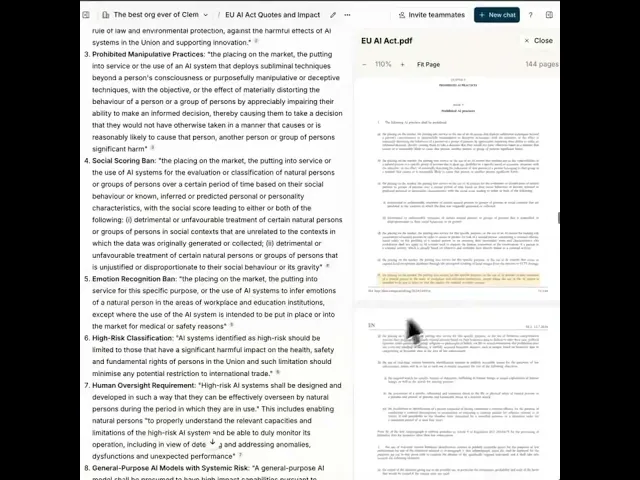
The fastest way to see the difference is to watch it. In the demo below, Exact Quote reviews a contract and pins every flag to the exact language in the document:
The switching-cost risk has a direct product answer now, too.
Contract Intelligence keeps the portfolio itself queryable in-house. Connect Google Drive, SharePoint, OneDrive, or Dropbox, and GC AI extracts the terms you describe into a sortable View, each value citing back to its source passage, with amendments and renewals linked into contract families.
The precedent bank accrues to your team, and the whole portfolio answers questions in plain language. For the intake itself, Automations runs the scheduled work, the weekly NDA queue and the renewal check, without waiting for someone to remember it.
Ritesh Patel, Chief Legal Officer at Viant Technology, described how the sequencing changes:
"Before, I'd call outside counsel and pay by the hour for a generic answer. Now, I can analyze it myself, see where it gets me, and call outside counsel if I'm truly out of depth."
The numbers back up the anecdotes. GC AI's December 2025 ROI study of more than 100 active customers measured 14 hours saved per lawyer per week and a 14% reduction in outside counsel spend, approximately $252,000 a year for the median company: 14% of the roughly $1.8 million median outside counsel budget in the ACC benchmarking data.
KT Farley, Chief Privacy Officer and Associate GC at Helix, puts the entry cost in outside counsel hours:
"The cost of a license is a couple of hours of outside counsel time."
Dimension | Outsourced Review | In-House Review + GC AI |
Turnaround on a standard contract | 24 to 48 hours commonly quoted for a single contract, faster tiers priced up | Minutes for the AI first pass, same-day out the door |
Cost structure | Per document, hourly ($250 to $350 for business lawyers per ContractsCounsel), or dedicated capacity, plus internal QC hours | Seat-based platform pricing, published on the GC AI pricing page |
Where your playbook lives | Maintained by you, executed by the vendor | Built, run, and compounded by your team in Playbooks |
Confidentiality perimeter | Vendor systems and staff, governed by DPA and access controls | Inside your own perimeter: SOC 2 Type II, SOC 3, GDPR, ZDR across the AI stack, AES-256 |
Who keeps the precedent | Reviewer context accrues at the vendor | Accrues to your team, queryable in Contract Intelligence |
Comparison data as of October 2026.
When Should You Still Outsource Contract Review?
Outsourcing wins in three situations. One-time volume spikes fit external capacity better than any hiring plan.
The M&A diligence room with 4,000 contracts and a six-week clock is a surge, and surges are what vendor benches are for, though even those rooms now get an AI due diligence sweep before the vendor bill starts running.
Jurisdictional gaps, the Brazilian labor agreements nobody on your team reads, belong with licensed local judgment. And litigation document review is a different discipline with its own vendors, economics, and tooling.
Outsource the spike and the specialty; keep the recurring flow. Playbooks and AI leverage keep paying off on the work that repeats. The firms that stay on your panel still need outside counsel management: guidelines, budgets, and enforcement.
The Make-or-Buy Test for Contract Review
GC AI's make-or-buy test asks five questions of each contract type before the work goes external:
Is the volume recurring? Recurring review favors in-house AI; spikes favor vendors.
Does a playbook exist? If you have to build an AI contract playbook to outsource, you have already built the asset that makes in-house review work.
What confidentiality tier is the paper? The higher the sensitivity, the stronger the case for keeping it inside your own security perimeter.
What turnaround does the business need? Same-day redlines beat any vendor SLA when the platform sits inside the team.
What does the fully loaded comparison say? Vendor fee plus onboarding plus internal QC plus switching cost, against platform cost plus the escalation hours your team would own either way. The ROI calculator takes team size, contract hours, and outside spend as inputs and returns the annual dollar impact.
Start this month with one contract type: pick the NDA queue, run two weeks of it through a Playbook alongside your current process, and put the results next to the last outsourcing quote you received. Teams that want the workflow taught can start with GC AI's free, CLE-eligible AI courses for legal professionals; the classes have trained 6,000+ in-house lawyers.
Price the Whole Workflow, Then Decide
An in-house team that keeps its recurring review keeps the compounding. Every playbook improvement, precedent call, and negotiation pattern stays the team's property.
Run one contract type through a Playbook, price the vendor quote against the whole workflow, and decide.
Frequently Asked Questions
Should We Outsource Contract Review or Use AI In-House?
Keep recurring contract review in-house with AI leverage, and outsource the spikes and specialties. Playbooks improve with every pass, context stays in the building, and in-house teams now license the same class of AI the review vendors run. One-time diligence surges, unfamiliar jurisdictions, and litigation document review remain the strong outsourcing cases.
What Is an Alternative Legal Services Provider (ALSP)?
An ALSP is a company that delivers legal support services, including contract review, eDiscovery, compliance operations, and flexible staffing, outside the traditional law firm model. Thomson Reuters sized the segment at $28.5 billion in its 2025 report, with 57% of corporate law departments using ALSPs for at least some work.
What Are the Risks of Relying on AI for Contract Review?
The risks of relying on AI for contract review are unverified output, missed business context, and confidentiality gaps in consumer-grade tools, and each one is addressable with platform-level controls. Verification is the big one: GC AI's Exact Quote cites every position back to the source document at the character level, so a lawyer can check any flagged clause against the actual text before it moves. The lawyer stays the decision-maker; the AI runs the first pass.
How Much Faster Is AI Contract Review Compared to Manual Review?
AI contract review returns a first pass in minutes on work that takes hours manually, and GC AI's December 2025 ROI study of more than 100 active customers measured 14 hours saved per lawyer per week. Ashley Good at Vuori put a dollar figure on a single review: $5,000 in legal fees saved in five minutes. The speed gain lands hardest on the contract types your team reviews every week.
Where Does Confidential Contract Data Go When You Use a Vendor?
Contracts sent to an outsourcing provider move through the vendor's systems and staff, governed by whatever DPA, access controls, and audit rights you negotiate before the first document ships. Keeping review in-house on a platform like GC AI keeps the work inside your own perimeter: SOC 2 Type II and SOC 3 certified, GDPR compliant, with zero data retention agreements across its AI providers.
How Do You Choose Contract Review Software for an In-House Legal Team?
Choose contract review software by testing it on contracts your team has already reviewed: run a completed NDA or MSA through the platform and compare its clause-by-clause read against what your team caught. Weigh playbook customization, verifiable citations, security certifications, and whether the platform serves in-house counsel as its primary customer. The best legal AI tools for in-house counsel guide ranks the current field, and the GC AI vs Spellbook comparison applies the criteria head to head.