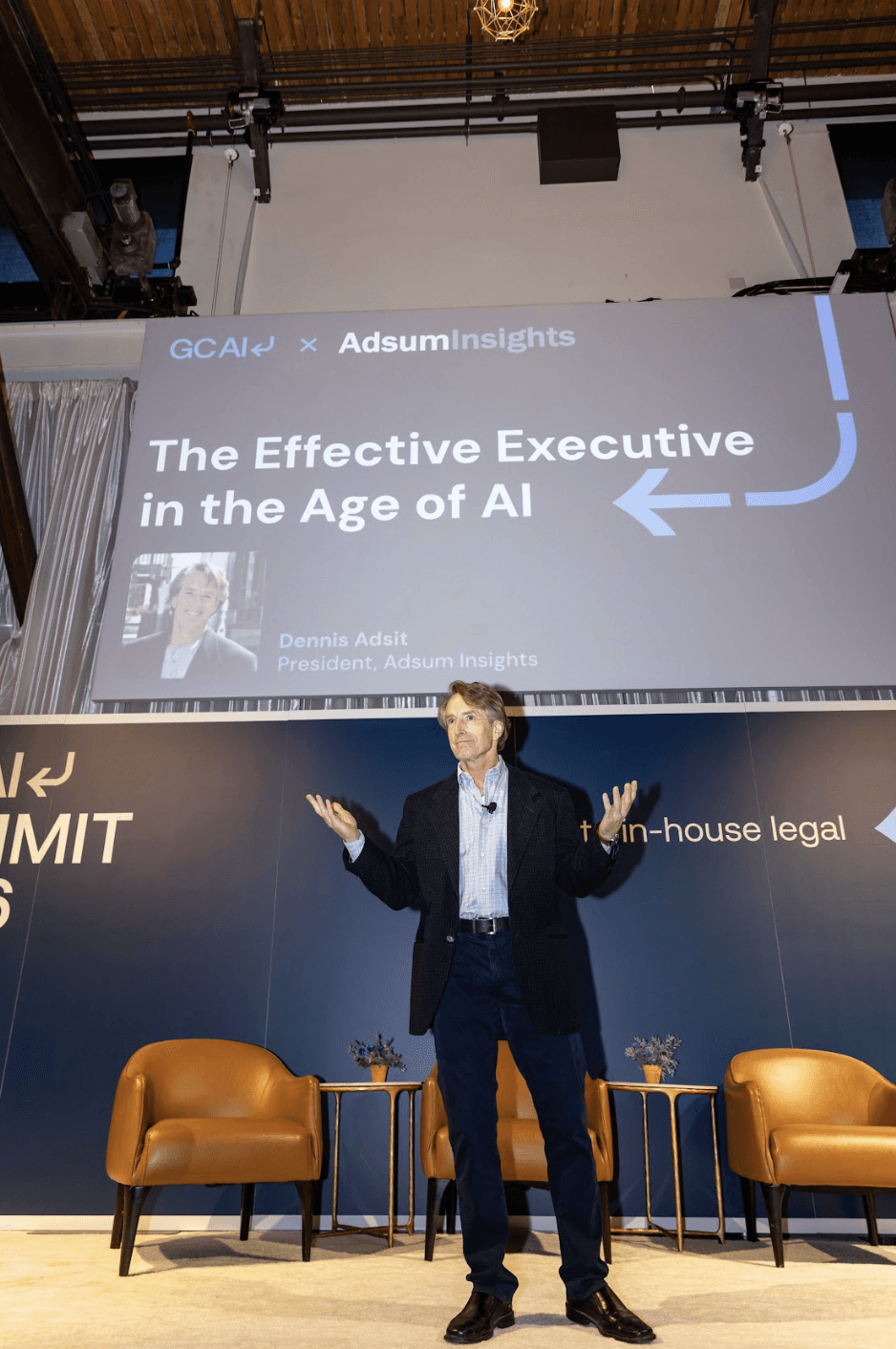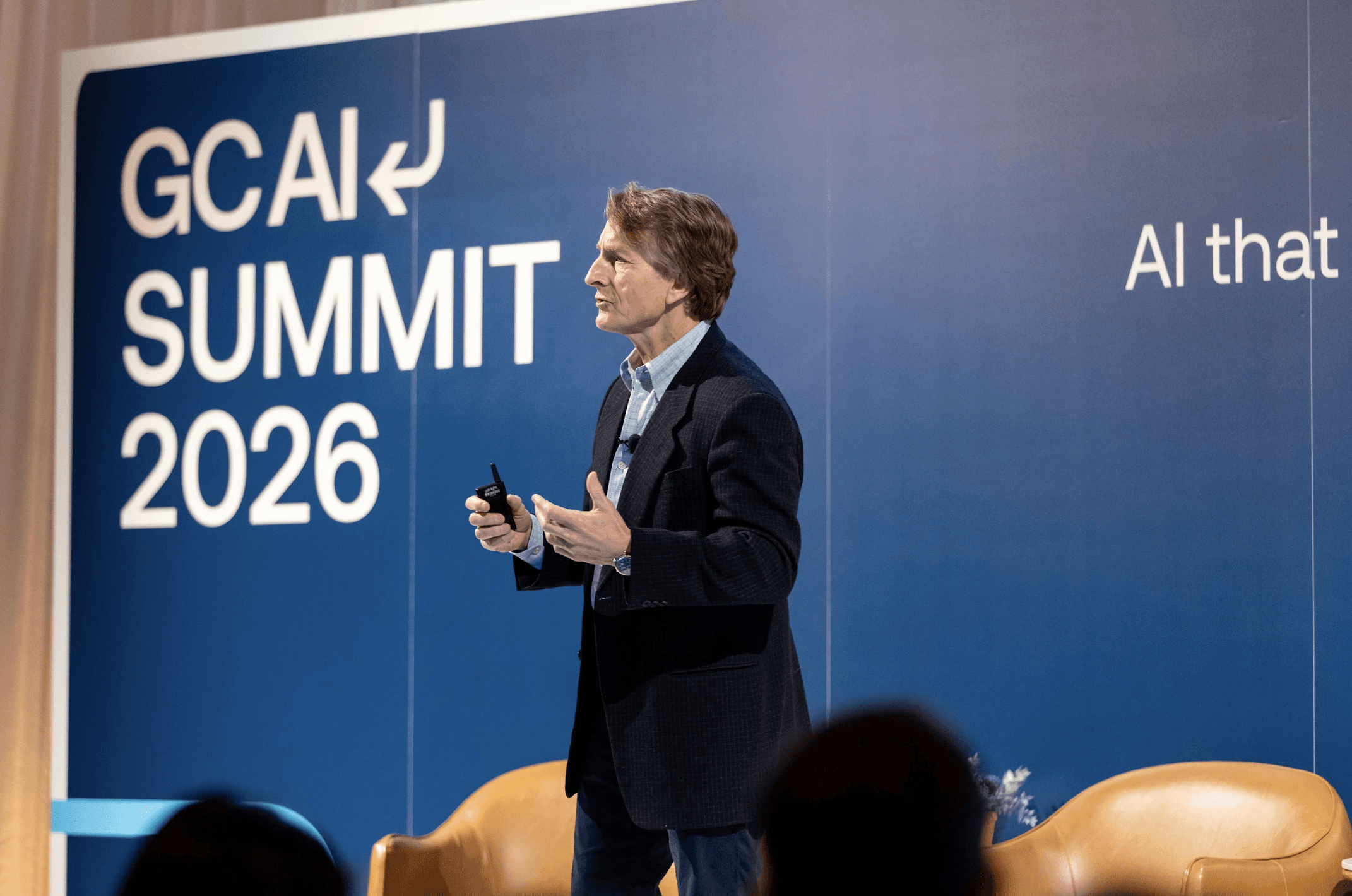
Leadership advice often collapses the moment technology shifts. Dennis Adsit's does not. Dennis opened his 2026 GC AI Summit talk with a statement that framed the challenge companies are facing today.
“AI is the largest simultaneous cross-company behavior, process, culture, and technology change the world has ever seen.”
AI has transformed how work gets done and how decisions are being made. Dennis’s core point was about leadership fundamentals. His model consists of four pillars:
Strategy
Execution
Team
Self
Dennis says they worked 20 years ago, and they will work 20 years from now. What changes in the age of AI is the emphasis inside each one.
Dennis describes effective leadership through these four pillars:
Set strategy
Strategy starts with clarity.Where are we today?
Where are we going?
How will we get there?
How will we know if it is working?
Dennis calls this a strategic change agenda. “If my client cannot articulate that, they’re not only not leading effectively. They’re not even leading.”
In the age of AI, the structure of strategy stays the same, but the cadence changes. Environmental scanning used to happen annually or quarterly, but that is no longer enough.
“Leaders and their teams have to dedicate time to seeing what’s changing.”
That means frequent benchmarking, watching how peers are using AI, and constantly asking whether current behaviors are still the right ones to win.
Execute effectively
Strategy without execution is just intention. Dennis gets very practical and asks leaders to share their calendars, operating rhythms, and how decisions actually get made. When teams are stuck or fighting, he usually asks one simple question.
“Who is the A in the RACI?”
RACI stands for Responsible, Accountable, Consulted, and Informed. The person accountable - who owns the outcome and makes the final call - is often unclear. That is why progress stalls. In the age of AI, execution gets harder because processes are always changing. AI is inserted into workflows. Roles shift. Stakeholders feel the impact.
“Continuous process improvement is back.”
Leaders need to understand their processes well enough to see where AI helps and how those changes affect the people involved. Influence starts with understanding.
Build the team
This is the pillar Dennis says leaders underinvest in the most.
“The most important leadership skill in the next decade is the ability to build high-performing teams.”
That means more than attracting talented individuals. Leaders need to create environments where people can find out how good they can be. They also need to address “people issues” early.
“The number one regret of leaders in transition is that they waited too long to address people issues.”
Dennis emphasizes checking team health from the team’s perspective, not just the manager’s.
“Oftentimes, the manager’s perceptions of what’s going on are way off from what the team actually feels.”
When leaders do this well, outputs improve, and people stay. Growth and retention move together.
Manage yourself
This pillar is about ownership, modeling, and generosity. Dennis listens closely to how leaders talk. When he hears phrases like “if my team would just” or “if my boss would leave me alone,” he hears what he calls the language of effect. Life is happening to them. They are not co-creating their reality.
Leaders have to shift out of that mindset. They need to model the behaviors they expect.
“If accountability is important, you need to be accountable. If transparency is important, you need to be transparent. If they need to use AI, you need to use AI.”
Dennis also asks leaders to reflect on how many managers they would actually work for again. The answer is usually about 30 percent.
“That means 70 percent of managers are somewhere between mediocre and terrible.”
The difference often comes down to generosity. “You have to delight in the success of others. You have to see your job as helping other people win.”
Generosity shows up in attention, praise, and celebration. Leaders who practice it create connection. And connection is what people are starving for at work.
Dennis closed with a story about Reid Hastings finding out his CEO had been washing his coffee cups, unbeknownst to him, as an act of appreciation for how much work he was doing. Reid’s reaction was immediate.
“I’ll follow him anywhere.”
That is the question Dennis sets up in closing.
“At the end of the day, the core leadership skill is: can you become someone that others want to follow?”
The four pillars have not changed. But in the age of AI, the bar is higher. Leadership is more visible, more human, and more demanding. People remember who helped them grow and they choose who to follow based on that.